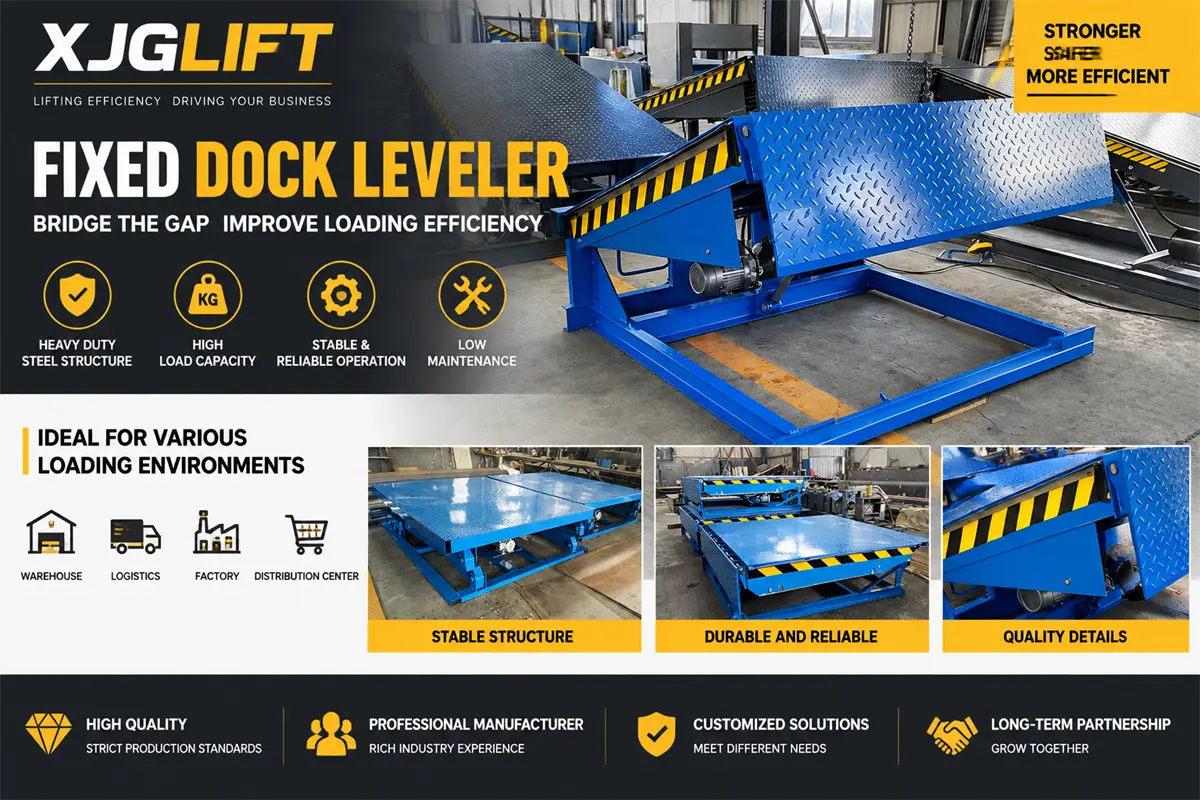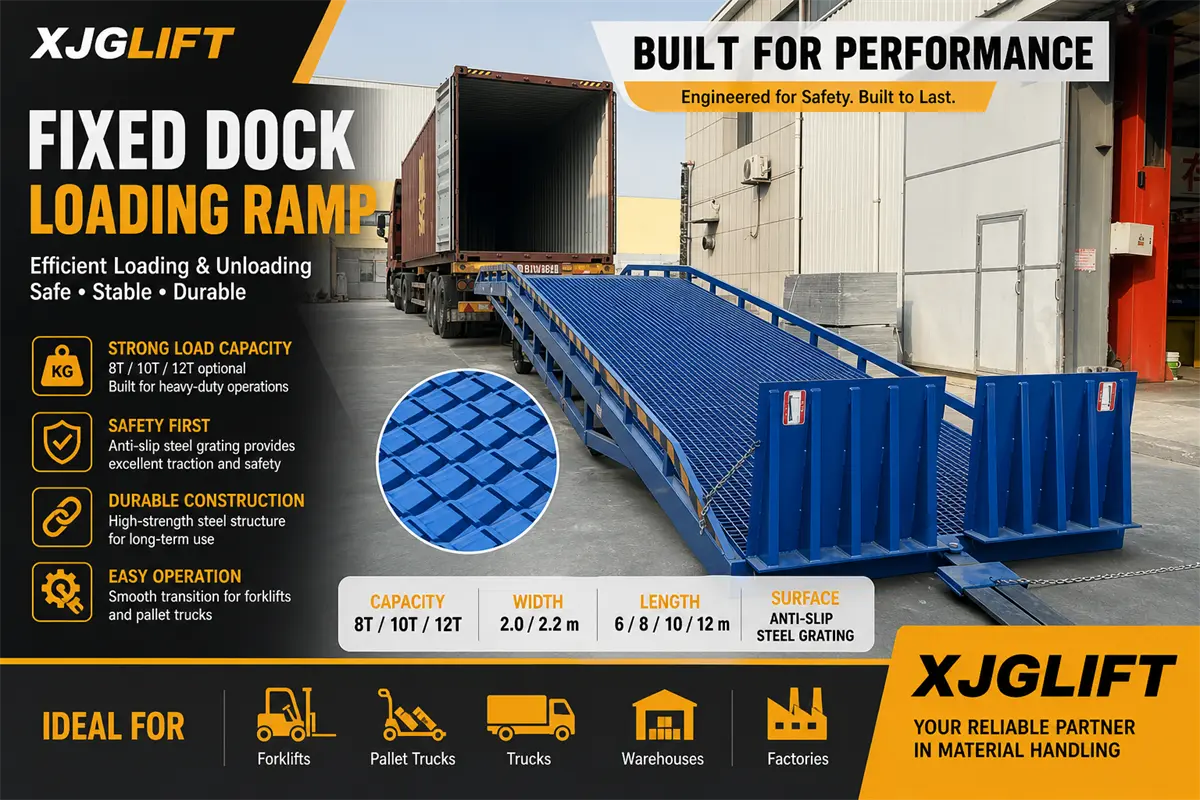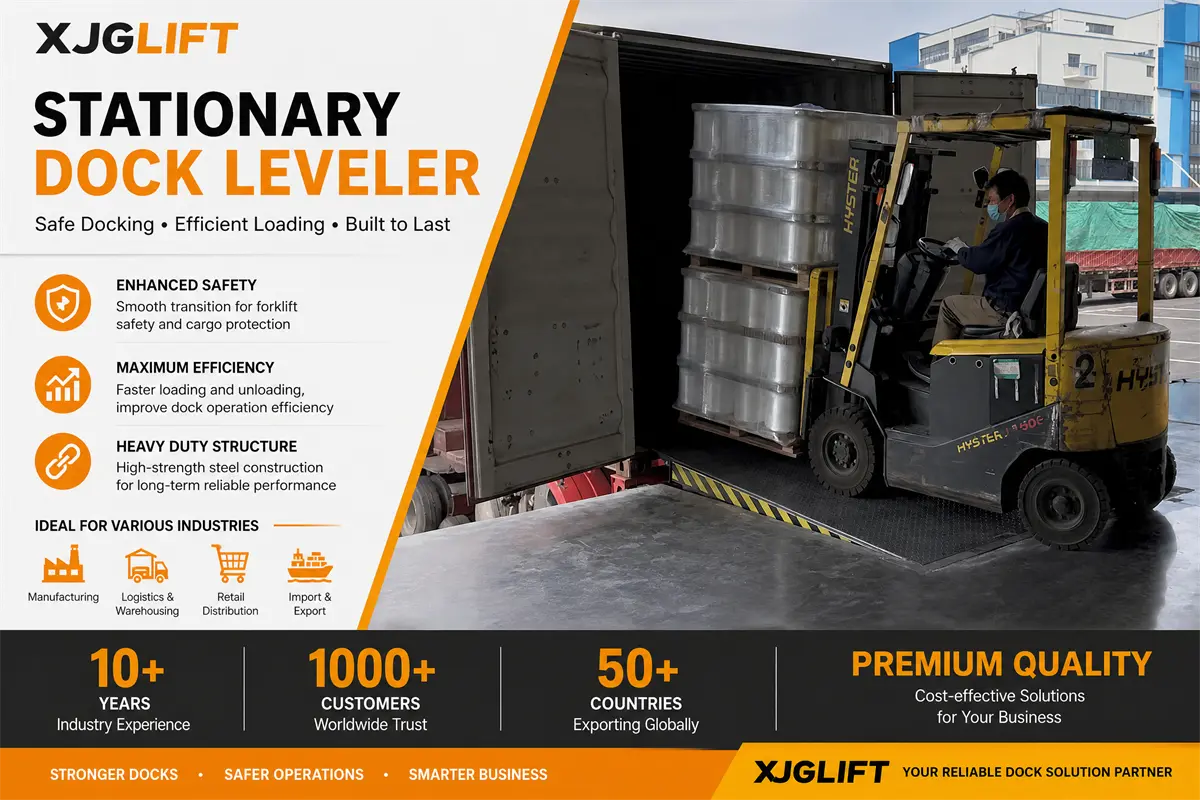
A loading dock is an opening in the exterior wall of an industrial or commercial building that allows delivery trailers to back up directly to the structure for efficient loading and unloading. The dock floor is elevated above the outside drive level and built to a height that roughly matches the bed of a standard trailer. That raised platform lets forklifts, pallet jacks, and other material handling equipment travel straight from the building floor into the trailer and back out again without ever touching the ground outside.
A functional loading dock, however, is more than just an opening in the wall. In everyday use, the term refers to the entire system: the opening itself, the leveling device that bridges the gap, the bumpers that absorb the trailer’s impact, the sealing components that keep weather and pests out, and the safety equipment that prevents the trailer from pulling away during a loading operation.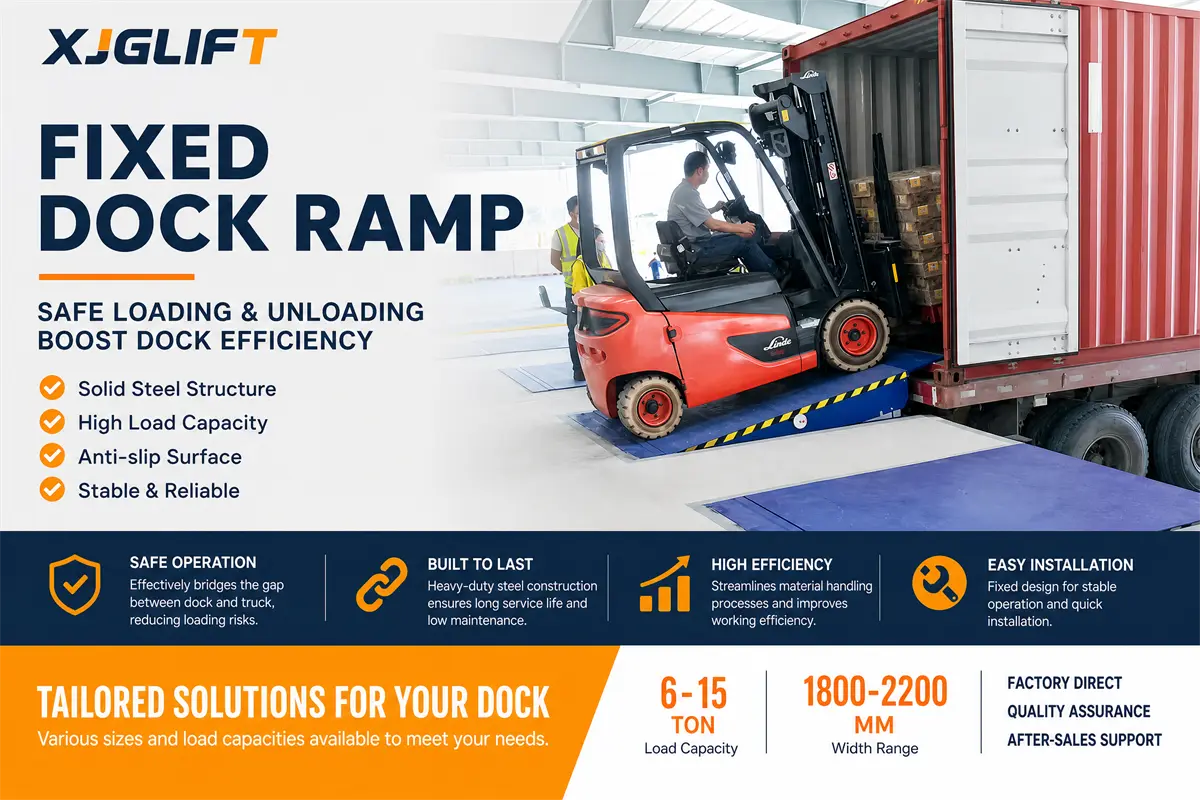
What a Loading Dock Actually Does
A loading dock performs three jobs at the same time.
First, it bridges the physical gap between the rear edge of the trailer and the building wall. That gap is small, usually less than a foot, but no wheeled equipment can cross it safely without a connecting surface.
Second, it compensates for height differences between the trailer bed and the building floor. Trailer bed height is never a fixed number. It changes with the type of trailer, the suspension system, and how heavily the trailer is loaded. An empty trailer sits higher than a loaded one, and the bed rises as freight is removed. The dock must be able to keep up with that movement.
Third, it protects the interior of the building during the loading process. Seals, shelters, and properly positioned trailers limit the exchange of outside air, which matters in cold storage, food distribution, and any facility that wants to control its internal temperature. They also keep rain, snow, dust, and insects out of the pick area.
Where Loading Docks Are Used
Any facility that moves palletized or unitized freight on a regular basis operates from loading docks. Distribution centers, e-commerce fulfillment warehouses, grocery wholesale facilities, cold storage operators, manufacturing plants, parcel hubs, and large retail backrooms all rely on them. The number of dock positions varies widely with facility size and throughput. A small regional warehouse might get by with one or two docks; a large cross-dock operation may run dozens.
Docks also appear in less obvious settings. Food processing plants use them to receive raw materials and ship finished product. Building material suppliers use them to handle lumber, drywall, and other bulky freight. Pharmaceutical and electronics distributors use them for high-value, damage-sensitive cargo. What the products are matters less than how they move: if freight travels on pallets and gets handled by powered equipment, a loading dock is normally part of the building design.
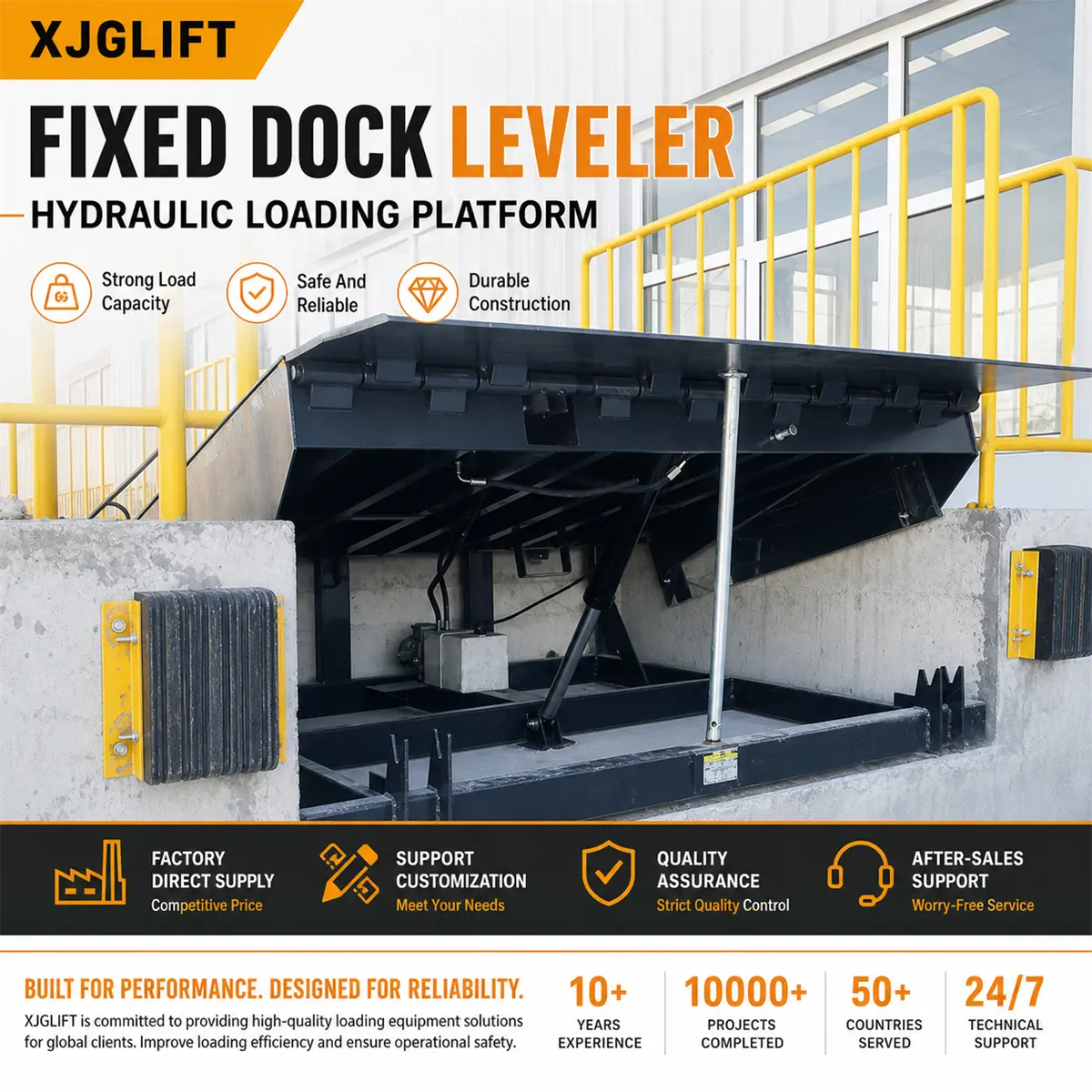
The Main Components of a Loading Dock
To understand how a dock works in practice, it helps to look at the individual parts that make it function.
- The dock opening. The structural opening in the building wall, sized to accommodate the trailers that will use it and the equipment that will pass through it.
- The dock pit. A recessed area in the concrete floor, usually about two feet deep, that houses the dock leveler so its surface sits flush with the building floor when not in use.
- The dock leveler. The adjustable bridge that spans the gap between the building floor and the trailer bed. It is the most important piece of equipment at the dock.
- Dock bumpers. Heavy rubber or laminated pads mounted on the exterior wall. They absorb the trailer’s impact as it reverses in and protect both the building and the leveler from collision damage.
- Dock seal or dock shelter. Sealing components mounted around the opening that close the space between the trailer and the building once the trailer is in position. Seals press directly against the trailer’s rear frame; shelters form an enclosed tunnel around it.
- Overhead door. The insulated or fire-rated door that closes and secures the opening when the dock is not in use.
- Dock light. A pivoting light arm mounted inside the dock that extends into the trailer so the operator can see the full interior, even in the daytime.
- Dock restraint. A device mounted on the exterior wall that locks onto the trailer’s rear impact guard. It prevents the trailer from pulling away while forklifts are inside.
- Dock guides. Low profile rails on the approach area that help the driver steer the trailer straight into the dock position.
Not every dock includes all of these items. Many older or smaller facilities still operate with a manual dock board and no restraint system. But the components above represent the standard setup for a properly equipped modern dock.
How a Loading Dock Works: Step by Step
A complete loading operation follows a sequence of events. Walking through that sequence is the clearest way to see how the system works.
- The trailer approaches the dock. The driver aligns the trailer using the dock guides and a fixed reference point, usually the center of the opening where the leveler sits.
- The trailer backs into the bumpers. The driver reverses slowly until the trailer’s rear frame makes solid contact with the dock bumpers. The bumpers compress slightly, positioning the trailer close enough to the building for the leveler to reach its bed but far enough to prevent the dock hardware from striking the trailer.
- The dock restraint engages. If the dock has a trailer restraint, it lifts to lock onto the trailer’s rear impact guard. This step is critical. Without it, the trailer could creep away from the dock as loading progresses if the driver releases the brakes, or if the trailer’s landing gear sinks into soft pavement.
- The overhead door opens. Once the trailer is secured, the door is raised, exposing the full dock opening.
- The dock leveler activates. The operator activates the leveler, either by pressing a push button, pulling a chain, or in some cases by predocking the leveler before the trailer arrives. The leveler raises slightly from its stored position, the lip extends outward toward the trailer bed, and the deck lowers until the lip rests on the trailer floor.
- Loading or unloading begins. The forklift or pallet jack drives from the building floor, across the leveler deck, and into the trailer. The leveler surface is designed to sit level with or slightly above the trailer bed, so equipment crosses a minimal incline rather than climbing a step.
- The trailer moves with the load. As freight is removed, the trailer’s suspension extends and the bed rises. As freight is loaded, the suspension compresses and the bed falls. The leveler follows this movement automatically so the lip never loses contact with the trailer floor.
- The operation finishes. After the last load has been moved, the leveler is raised back to its stored position and the lip retracts. The overhead door closes, the restraint releases, and the trailer pulls away.
Height Differences and the Role of the Dock Leveler
The dock leveler exists because building floors and trailer beds rarely line up perfectly. Standard over-the-road trailers commonly have bed heights in the area of 48 inches when loaded, but different trailers and different axle configurations sit at different heights. A straight truck, a liftgate-equipped box truck, and a high-cube trailer may all use the same dock on the same day.
The leveler handles this variation mechanically. When not in use, the leveler deck rests flat in the dock pit, flush with the concrete floor. On activation, a hydraulic cylinder, air bag, or mechanical spring mechanism raises the deck. The lip hinge extends the short plate at the front of the deck, and the deck lowers until the lip makes contact with the trailer bed. From that point, the leveler operates in what is called “float” mode: it stays in light contact with the trailer bed and moves up and down as the trailer’s suspension reacts to changing load weight.
This float capability separates a real dock leveler from a fixed ramp. If the leveler were locked at one height, the forklift would face a dangerous step as soon as the trailer rose or fell even an inch or two. Instead, the leveler keeps a smooth transition between the two surfaces throughout the entire operation.
The leveler’s rated capacity matters here. It must be able to support the combined weight of the forklift and its heaviest load, including the impact forces that occur when equipment crosses the transition. That capacity rating is specified by the manufacturer and selected based on the actual equipment the facility operates, not on guesswork.
Common Loading Dock Configurations
Loading docks are built in a few different configurations, and the layout affects how the facility operates day to day.
The most common setup is a flush dock, where the dock opening sits flat against the exterior wall of the building. The trailer backs up to the wall, and the dock seal or shelter closes the remaining space. Flush docks are simple, relatively inexpensive to construct, and suitable for most climates.
An enclosed dock brings the entire operation inside. Trailers back into a loading bay within the building itself, where an interior door and leveler connect the trailer to the storage area. Enclosed docks are common in cold storage operations because they keep the product in a fully climate-controlled environment from trailer to rack.
A recessed or covered dock is set back from the building face, with the overhead door positioned at the outside edge of the recess. This gives overhead protection from rain and snow while the trailer is connected. It is often seen at older facilities or in areas with heavy precipitation.
Some buildings, particularly older ones, have nothing more than a ground-level door and rely on a portable dock plate or a ground-level ramp. Those setups are not true loading docks, and they come with significant trade-offs in efficiency and safety.
Operating a Dock Safely and Efficiently
The equipment at a loading dock only works well when it is operated and maintained with discipline. A few routine points separate a smooth operation from one that creates daily problems.
- Use the restraint every time. Trailer creep and trailer separation are real risks. A forklift operator inside a trailer that pulls away from the dock can be seriously injured. If the dock is equipped with a restraint, setting it should be a mandatory step in the process.
- Keep the pit clean. The dock leveler pit collects debris, spilled product, and dropped trash. That buildup interferes with the leveler’s moving parts and can prevent the deck from settling flush with the floor. Cleaning the pit should be part of the regular housekeeping schedule.
- Inspect the bumpers. Worn bumpers change how far the trailer sits from the building. If the bumper has compressed to the point that the trailer contact is inconsistent, the leveler lip may not reach the trailer bed correctly. Replace bumpers before they wear through completely.
- Check seals and shelters for damage. Drivers misjudging their approach is the most common cause of damaged dock seals. A torn seal defeats its purpose and lets conditioned air escape, which shows up directly in the utility bill.
- Extend the dock light. Forklift operators should never work in a trailer interior they cannot see. The dock light should be positioned so the entire load area is visible.
- Match equipment to the operation. A forklift that is too heavy for the leveler rating or too tall to clear the trailer opening will cause recurring problems regardless of how carefully it is operated.
FAQ
How high is a typical loading dock?
Most loading docks for standard over-the-road trailers are built with a concrete floor roughly 48 inches above the outside drive level. Actual heights vary with the trailer fleet the facility serves, the type of suspension, and the local requirements. Some docks are lower or higher depending on the operation.
What is the difference between a dock leveler and a dock plate?
A dock leveler is a permanently installed, powered device that is built into the dock pit and automatically adjusts to the trailer bed. A dock plate is a portable aluminum or steel plate that is placed manually across the gap and is not capable of following trailer movement. Levelers are the standard for regular loading operations; plates are typically used at low-volume or temporary locations.
Can a loading dock be added to an existing building?
Yes, in many cases. Adding a dock to an existing warehouse involves cutting an opening in the wall, pouring a dock pit, installing the leveler and door, and preparing the exterior approach. The building’s structural condition and the surrounding site must be evaluated first, and local regulations can affect the construction. Any work of this type should be coordinated with a structural engineer and an experienced dock equipment supplier.
Why does the trailer move up and down during loading?
The trailer sits on air or leaf spring suspension. When loaded freight is placed in the trailer, the suspension compresses and the trailer bed drops. When freight is removed, the suspension extends and the bed rises. This movement can amount to several inches over the course of a full loading operation, and the dock leveler must move with it to keep the transition between the dock and trailer smooth.
Conclusion
A loading dock is the section of the building where the inside floor meets the outside truck traffic. It is also the area where a forklift, a thirty-foot trailer, and a fast-moving operation come together, and getting the fundamentals right makes a measurable difference in throughput and safety. The dock leveler bridges the height and gap differences, the bumpers and restraints position and hold the trailer, and the seals and doors keep the building protected.
Anyone planning a new dock or evaluating an existing one should start by confirming the basics: the size and type of trailers in the fleet, the equipment that will cross the leveler, and the frequency of use at each position. With those details confirmed, the right configuration and equipment rating become straightforward decisions.