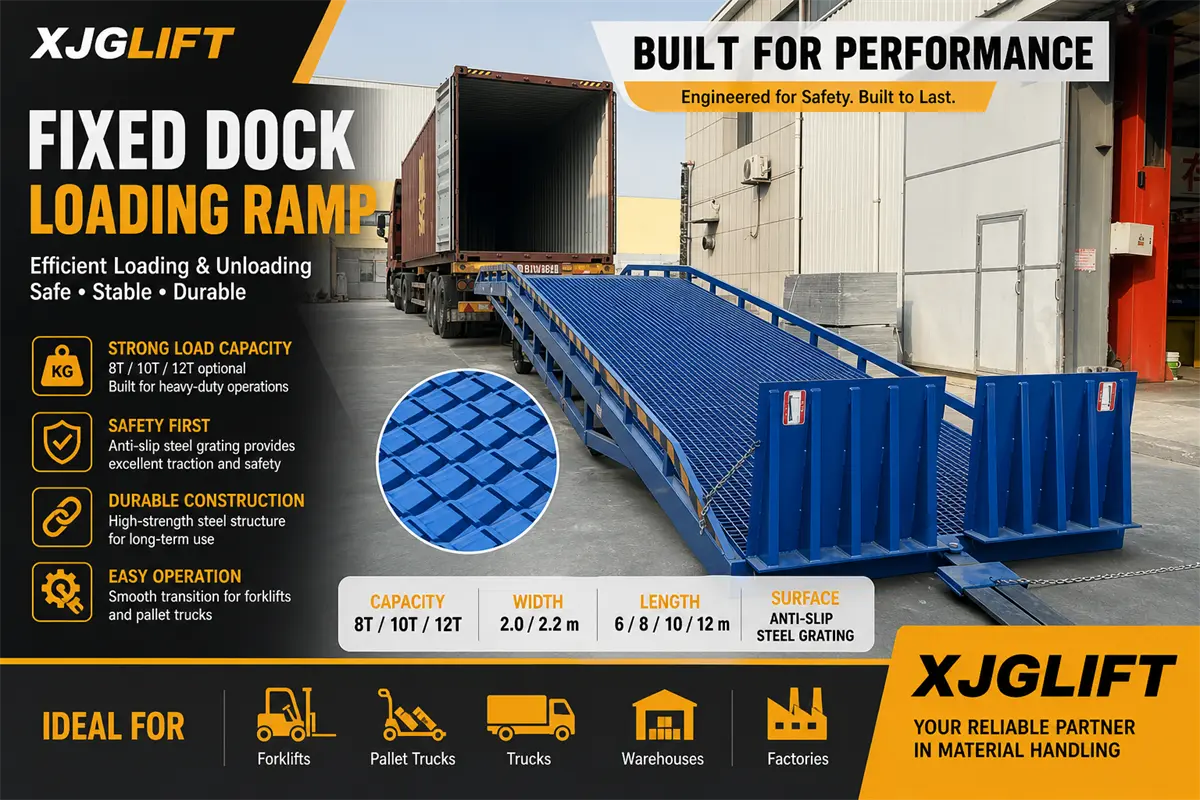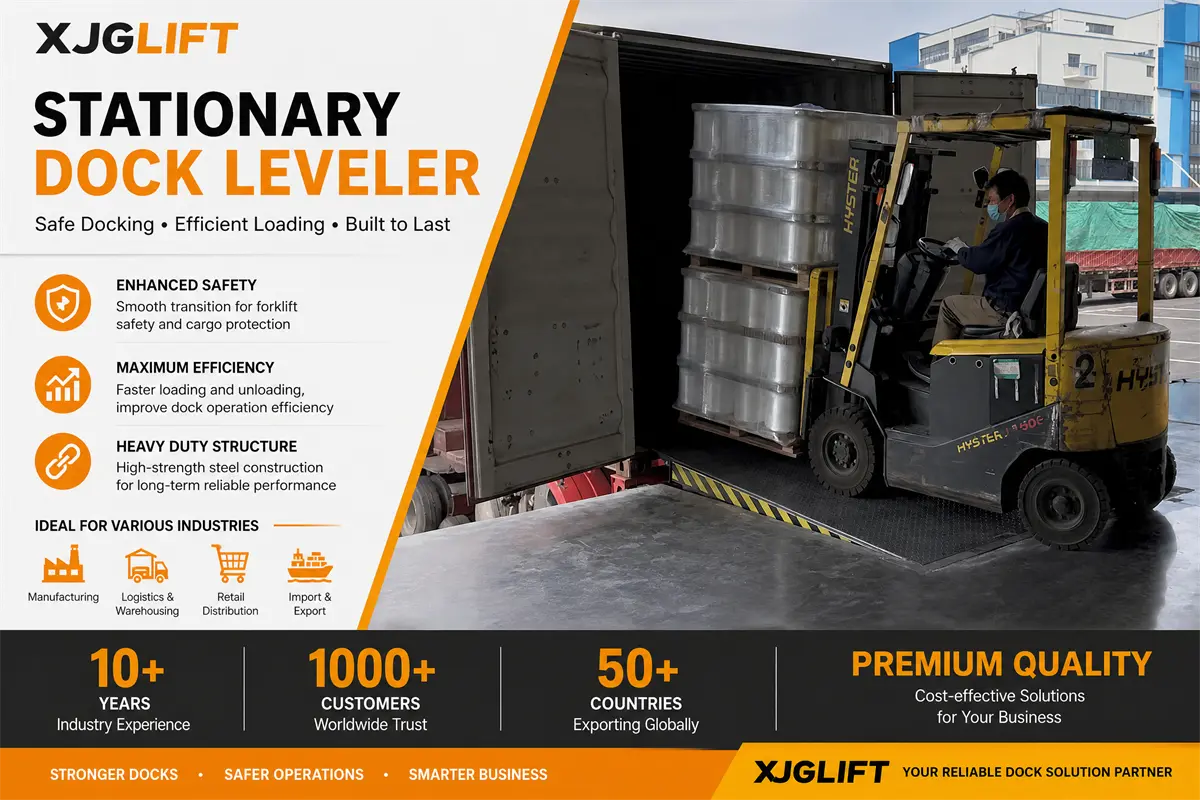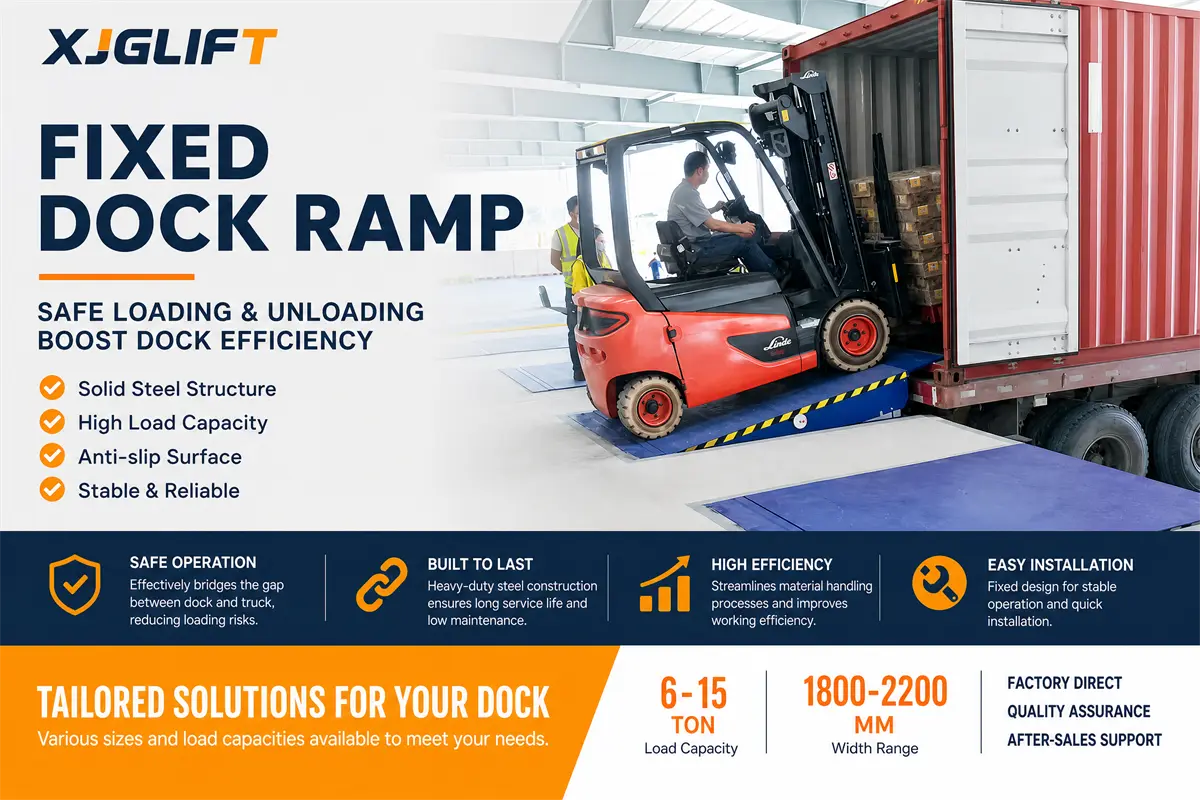
Purchasing a yard ramp is a specification exercise as much as a purchase decision. The ramp must bridge ground level and the trailer floor, carry the combined weight of a forklift and its cargo, and hold up to thousands of drive-over cycles in all weather. This guide explains how yard ramp sizes and capacities are determined, then walks through the practical factors buyers should review before ordering.
Where a Yard Ramp Fits in the Loading Operation
A yard ramp, also called a mobile yard ramp or portable loading ramp, is a freestanding incline used to load and unload trucks from ground level. The ramp is positioned against the rear of the trailer, and the forklift drives up the platform and into the trailer body. Facilities choose this approach when a raised loading dock is not available, not practical, or not worth the cost of construction.
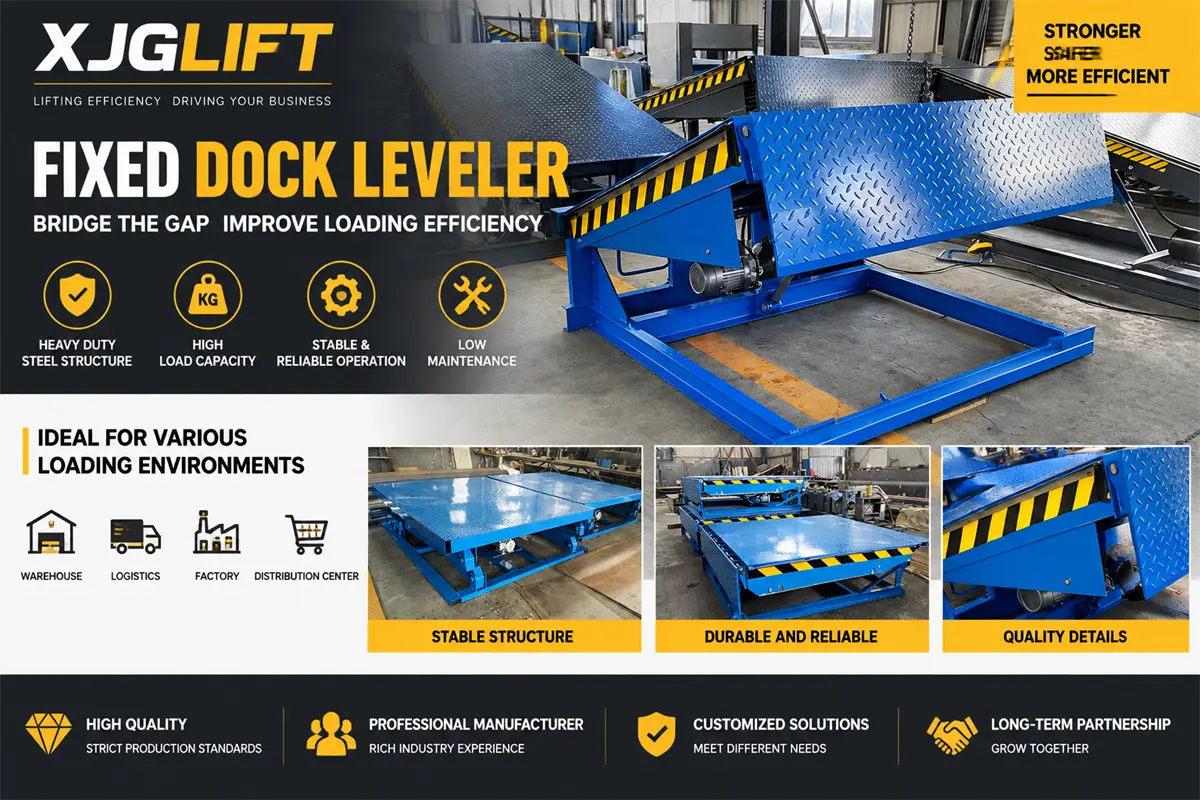
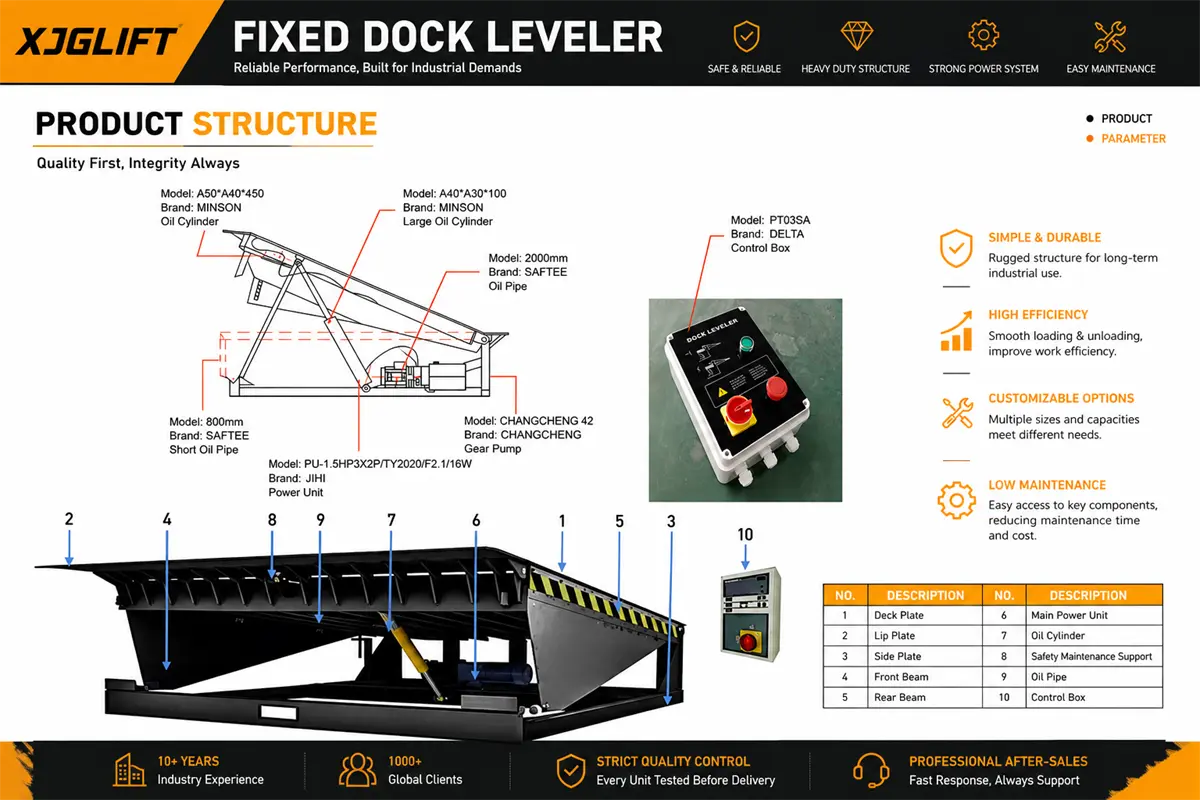
Typical applications include warehouses and distribution centers without dock doors, temporary loading positions during peak seasons, factory bays where trucks back up to ground-level doors, and rental operations that need loading capability at different sites. Unlike a fixed dock leveler, a yard ramp is a standalone piece of equipment that can be moved wherever the work is.
Because the ramp carries powered forklifts with concentrated wheel loads, the size and capacity rating have to match the actual equipment and operating conditions — not an estimate of the heaviest pallet passing through the door.
Yard Ramp Sizes: Understanding the Specs
Yard ramps are generally described by four dimensions: platform length, platform width, working height range, and lip length. All four have to be reviewed together, because they determine whether the ramp works with the trucks arriving at the facility.
Platform Length and Ramp Grade
The length of the inclined platform sets the slope the forklift must climb. A longer platform produces a shallower grade at a given height, and every powered forklift has a maximum grade it can safely manage with a load. If the ramp length is too short for the height it must reach, the climb becomes steep, the forklift strains, and the operator’s control suffers.
The relationship becomes more demanding when the ramp serves trailers at different heights. The platform length must perform at the top of the height range, since that is where the slope is steepest. Buyers should compare the ramp’s grade at its maximum working height with the grade capability of the forklifts that will use it.
Platform Width
The platform must accept the full width of the forklift, including attachments such as side shifters, and still give the operator enough room to line up with the trailer door opening. A narrower platform keeps the ramp lighter and less expensive, but an operator who has to make a precise alignment on every pass loses time and increases the risk of the wheels riding close to the edge. Width selection should start from the widest forklift in the fleet.
Working Height Range
This is the range of trailer floor heights the ramp can serve. A fleet of over-the-road dry vans, refrigerated trailers, and straight trucks will present a spread of bed heights, and the ramp’s working range has to cover that spread.
One point that is often missed: a trailer’s floor height changes as it is loaded and unloaded. Suspension compression lowers the bed as weight comes in and raises it as weight leaves. The ramp must handle both the loaded and unloaded heights of each trailer type, not just the height measured on an empty parked vehicle.
Lip Length
The lip is the hinged section that extends from the platform and rests on the trailer floor once the ramp is in position. The lip must reach past the trailer threshold and seat on a sound portion of the floor. Trailers with liftgates, rear frames, impact guards, or heavily recessed thresholds can reduce the usable seating area, so the lip specification should be checked against the actual trailers — not against a generic trailer diagram.
Yard Ramp Capacities: Rating the Ramp for the Actual Work
Capacity is usually stated as the maximum gross load the ramp can support, expressed in pounds or kilograms. The figure that matters to a buyer is the combined weight of the heaviest forklift — including attachments — plus the heaviest load it carries. Rating the ramp on the cargo weight alone is a common miscalculation.
Combined Weight and Load Distribution
A forklift concentrates its weight through its wheels, so the ramp structure sees point loads as the machine travels up and down. The rated capacity should apply across the full length of travel, not just at a stationary center position, and it should cover the worst-case combination that will actually run over the ramp.
Capacity and slope also interact. A heavily loaded forklift climbing a steeper grade places higher demands on both the forklift and the ramp structure. Choosing a longer platform reduces the grade, but it also changes the ramp’s weight, footprint, and cost. For this reason, capacity should be calculated from real-facing, not guessed at.
Capacity, Construction Weight, and Portability
Higher capacity ratings mean more steel in the main frame, stringers, and decking. That makes the ramp substantially heavier, which directly affects how easily it can be repositioned around a facility. A ramp rated far above the actual requirement may be harder to move, store, and handle than a correctly sized unit. The trade-off between capacity and portability is the main reason buyers should specify from actual weights rather than ordering the largest rating available.
Duty cycle should also influence the specification. A ramp run continuously across multiple shifts deserves a heavier structural margin than one used for occasional loading, even when the peak load is the same.
Yard Ramp Buying Guide
Beyond the basic dimensions and capacity, several operational decisions determine whether a specific ramp is a good fit for the site.
Moving and Repositioning the Ramp
Most yard ramps are moved with a forklift using fork pockets. Some models have wheels that allow towing or repositioning, and many lower to the ground during operation and raise onto their wheels for transport. If the ramp will serve several doors, move between buildings, or be relocated frequently, ease of repositioning is a major selection factor. Confirm how the unit is moved, what lifting equipment is required, and whether an existing forklift on site can handle it.
Power Source for Raising and Height Adjustment
The raising mechanism positions the lip and adjusts the platform height — it does not lift the load. Manual hand pumps are adequate for occasional adjustment, but in steady operation a powered raise saves time and reduces physical effort. Common configurations include manual, electric-hydraulic, and air-powered systems. The right choice depends on what the site has available — electrical supply or compressed air — and how often the ramp height has to change during the day.
Safety Features and Compliance
A ramp that is comfortable to drive over is a ramp that gets used correctly. Look for slip-resistant decking, raised curbs or side rails on exposed edges, safety chains that secure the ramp to the trailer, and stabilizing supports that prevent shifting during loading. Regional workplace safety rules may also apply, and buyers should confirm which requirements govern ramps used in their market before the order is placed.
Site and Ground Conditions
The ramp sits on the ground, and the ground carries the load. The parking and loading surface should be firm and level enough to support the ramp plus the concentrated weight of a loaded forklift. Asphalt that softens in heat, soft ground, or a sloped approach can allow the ramp to settle or shift between passes. The approach area also needs room for the forklift to line up squarely with the trailer before starting the climb.
Trailer and Forklift Compatibility
Measure the actual trailers, not just their nominal descriptions. The working height range, lip length, and platform width must match the vehicles arriving at the dock. If the facility uses a mix of liftgate trailers and standard vans, confirm that the ramp works with both — liftgate assemblies and rear frames can limit where the lip can seat, and their height can exceed the platform’s working range.
The forklift side matters just as much. Forklift width, wheelbase, and overall length affect how the machine behaves on the incline and through the trailer door opening. If the fleet includes forklifts of different sizes, the ramp should be specified for the largest unit that will routinely use it.
Frequency of Use
High-throughput operations should be specified with heavier structural margins, power-assisted height adjustment, and more robust safety guarding. Lower-frequency sites can work well with simpler configurations. Matching the equipment to the duty cycle avoids paying for performance that will not be used in the actual operation.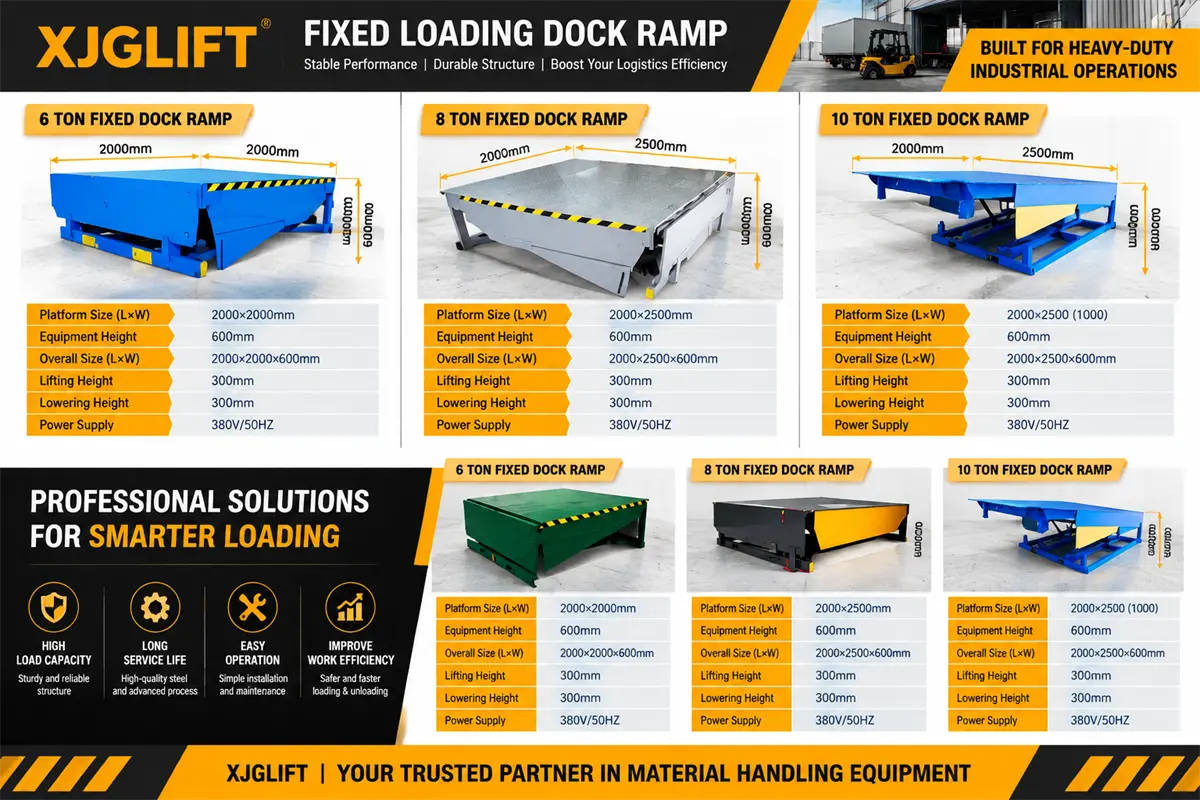
What to Confirm Before You Buy
When preparing to request quotes from manufacturers or suppliers, assemble this information in advance:
- The heaviest forklift in the fleet, including the weight of all attachments
- The heaviest load that forklift will carry
- The combined gross weight of that forklift and load
- Forklift width and wheelbase
- The range of trailer floor heights, measured loaded and unloaded
- Trailer types that will be serviced — vans, reefers, straight trucks, liftgate units
- The number of loading positions and how often the ramp will be moved
- Ground surface and site conditions at each loading position
- Available power at the site, if powered adjustment is under consideration
- Indoor or outdoor storage, and any finish or corrosion protection requirements
- Safety and compliance requirements for the region where the ramp will operate
Suppliers can respond accurately to this kind of detail. Vague inquiries produce quotes that are difficult to compare, because each manufacturer will assume different operating conditions.
Cost Factors to Compare in Quotes
Quotes for yard ramps vary with size, capacity, construction, and options. Understanding what drives the price makes it easier to compare offers on the same basis.
Capacity and structural weight account for a large share of the cost, since more steel means more material and more fabrication. Platform dimensions follow the same logic — a longer or wider platform increases both material and weight. The power source for height adjustment adds to the cost but can pay for itself in high-frequency operations. Finish options such as galvanizing or heavy-duty paint affect longevity in outdoor or corrosive environments. Custom widths, lip lengths, and safety packages are typically priced according to specification. Finally, shipping and site access matter — delivery of an oversized steel structure to a site with limited access can add meaningfully to the total cost.
Countries also worth saying: a low quote may reflect lower capacity, lighter construction, or fewer safety features. Compare the complete specification, not the price per unit alone.
FAQ
What is the difference between a yard ramp and a dock leveler?
A dock leveler is installed into a raised loading dock and bridges the gap between the dock edge and the trailer floor. A yard ramp is a freestanding, portable ramp that provides loading access from ground level where no dock exists. Facilities sometimes use both — levelers at permanent dock doors and yard ramps for ground-level or temporary loading positions.
Do yard ramps require installation?
No permanent installation is required. The ramp is positioned where it is needed, secured to the trailer with safety chains, and removed when not in use. The ground surface must be level and capable of supporting the combined weight of the ramp and a loaded forklift.
How is the right capacity for a yard ramp calculated?
Add the weight of the heaviest forklift, including all attachments, to the weight of the heaviest load it will carry. That combined figure is the working number to give to the manufacturer. Capacity should not be based on the load weight alone.
Can a yard ramp be left outdoors?
Many ramps are built for outdoor use, but the finish and corrosion protection should match the climate. Galvanized or specially coated units withstand moisture and temperature swings better than standard painted models. If the ramp is stored outdoors in cold climates, the hydraulic components should also be selected for the working temperature range.
Conclusion
The core of any yard ramp purchase is matching the platform length, width, working height range, lip, and capacity rating to the real equipment and conditions at the loading site. Sizes and capacities interact — a longer platform eases the climb but adds weight, and a higher capacity adds steel but reduces portability — so the specification needs to be checked against the fleet and the ground it will be used on. Gather the forklift and trailer data, confirm the site conditions, and provide the full details to the manufacturer when you request quotes.