Truck Loading Ramps: Types&Capacities and Applications
Truck loading ramps are used wherever the loading area sits at a different level than the truck or trailer bed. They provide a transition surface that forklifts, pallet jacks, and other material handling equipment can drive across safely. The ramp may be a portable unit, a permanently installed structure, or a powered platform, and the right choice depends on the loads being handled, the height difference that must be bridged, and how often the ramp will be used.
This article reviews the main types of truck loading ramps, explains how capacity is determined and what the ratings mean in practice, and describes the applications where each configuration is most commonly found.
Types of Truck Loading Ramps
Truck loading ramps are built in several different configurations. The type is defined by how the ramp is positioned, how its working height is adjusted, and whether it is designed to stay in one location or move between loading positions.
Portable Truck Loading Ramps
Portable ramps are self-contained units that can be repositioned with a forklift, pallet jack, or integrated wheels. They are usually fabricated from steel or aluminum, with aluminum versions offering lighter weight for easier handling.
The main advantage of a portable ramp is flexibility. A single unit can serve multiple bay doors, support loading at different points around the yard, or be moved to wherever a truck happens to park. This makes portable ramps a practical option for facilities with irregular loading patterns or for operations that need a temporary solution. When not in use, the ramp can be stored out of the way, which preserves floor space inside the building.
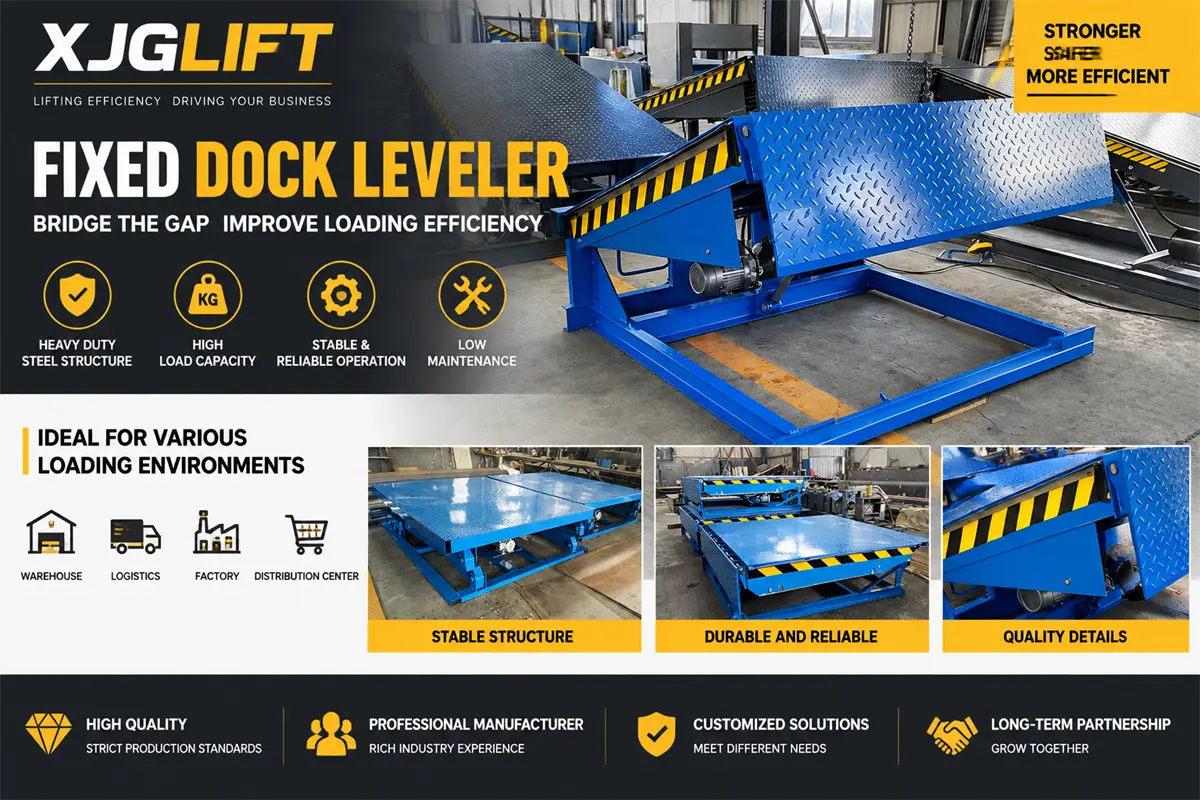
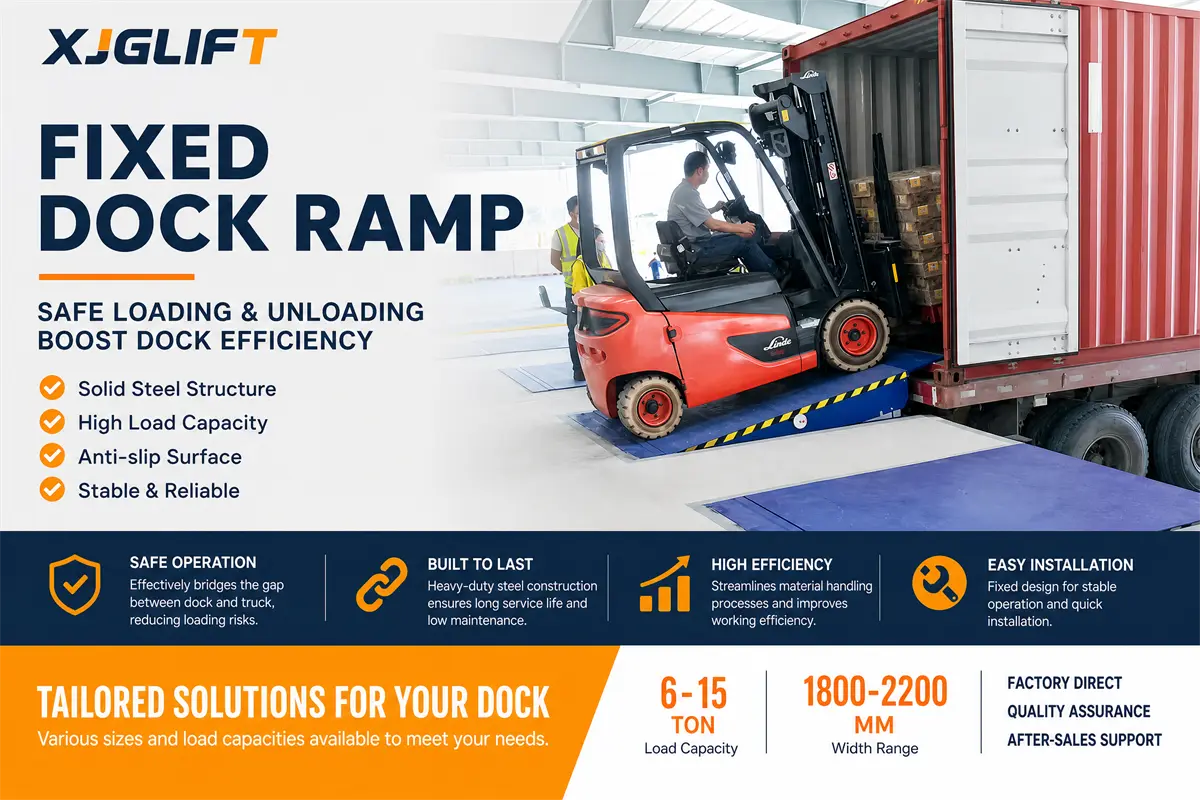
Fixed Truck Loading Ramps
Fixed ramps are permanently installed at a specific loading position. They may be built into a concrete approach, anchored to an existing dock face, or supplied as structural steel assemblies installed on site.
Because they are not moved, fixed ramps can be engineered for a specific height range and duty cycle. They generally offer greater rigidity and long-term stability than portable units, and they can be integrated with safety features such as guardrails, side curbs, and fall protection. The trade-off is that they require civil or structural work, and they cannot be relocated if the loading pattern changes.
Hydraulic Truck Loading Ramps
Hydraulic ramps use a power pack and hydraulic cylinders to raise and lower the ramp deck. The operator controls the height from a push-button pendant, which allows the ramp to be matched quickly to different truck bed heights during the same shift.
This type is well suited to operations where a fleet of vehicles with varying bed heights is loaded in sequence. A van, a flatbed trailer, and a refrigerated truck may all present different loading levels, and a hydraulic ramp can adjust to each one in seconds. Hydraulic systems also reduce the physical effort required from workers, which matters when the ramp is cycled constantly throughout the day.
Mechanical and Manual Truck Loading Ramps
Mechanical ramps are adjusted manually, typically through a hand crank, lever, or manual pump. They require no electrical supply or hydraulic power pack, which lowers both the purchase cost and the maintenance requirements.
Manual adjustment is slower and demands physical effort, so these ramps are usually chosen for low-frequency operations or for sites where power is unavailable. A facility that loads a single truck each day, or that needs a backup ramp for an occasional oversize vehicle, can operate a mechanical ramp effectively without adding powered equipment.
Yard Ramps
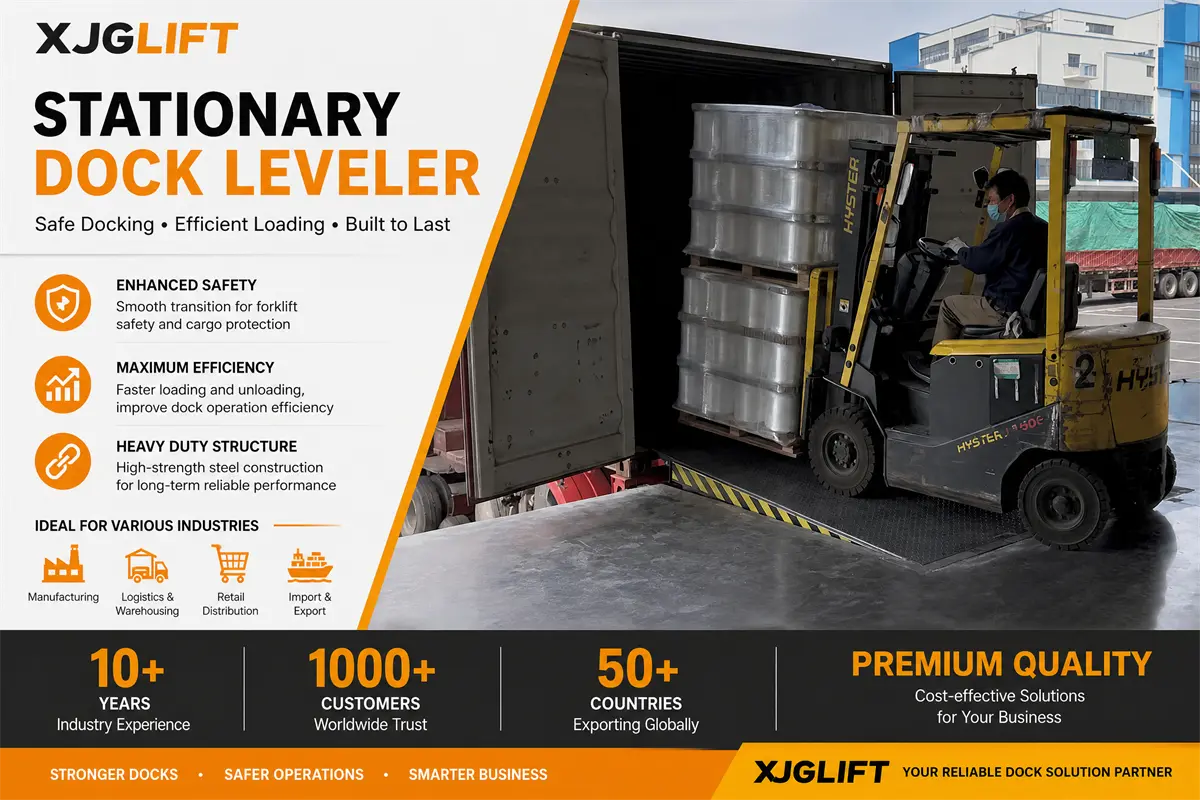
Yard ramps, sometimes called mobile yard ramps, form a specific category within truck loading ramps. They are used where vehicles are loaded outside the building or at ground level. One end of the ramp sits on the ground while the raised end is positioned against the truck bed, and the forklift travels up the incline to enter the trailer.
Yard ramps are common in facilities without loading docks, in open storage yards, and in operations where trucks cannot back into a building. They are frequently equipped with adjustable height at the truck end so that the ramp can meet trailers of different heights, and many are designed to be repositioned by a forklift when the loading location changes.
Understanding Truck Loading Ramp Capacities
Capacity is the specification that determines whether a ramp can handle the equipment and loads moving across it. The rating, however, involves more than the total weight printed on the nameplate.
Rated Capacity and Actual Working Load
The rated capacity is the maximum load the ramp is designed to support under conditions defined by the manufacturer. When matching a ramp to an application, the working load must include the combined weight of the forklift truck, its payload, and the operator. It is not the weight of the goods alone.
A light lifting truck carrying a heavy pallet can easily exceed the working capacity of a ramp that was selected only on the basis of pallet weight. Buyers should therefore identify the heaviest combination of truck and load that will cross the ramp, not just the heaviest single load.
Dynamic Loads from Moving Equipment
A forklift driving across the ramp produces dynamic forces that differ from a static weight. Acceleration, braking, sudden load shifts, and uneven transitions between the ramp and the truck bed all increase the forces acting on the structure. Manufacturers account for these dynamic effects in the design, but operating speed must still stay within the recommended range.
Axle Load and Load Distribution
Total capacity alone does not tell the full story. The weight of a loaded forklift is concentrated at the wheels, and a lift truck carrying a heavy load transfers most of its weight to the front axle. A ramp that is strong enough for a uniformly distributed load may not be suitable for the same weight concentrated at a set of wheel points.
Equipment with a narrow wheelbase, such as certain pallet jacks or reach trucks, creates even higher point loads. The ramp’s axle load rating should be checked against the actual wheel loads and wheel spacing of the equipment in use.
Slope and Effective Capacity
The slope of a ramp is determined by the height difference between the ground and the truck bed, combined with the usable length of the ramp. A longer ramp produces a gentler slope, while a short ramp over the same height creates a steeper incline.
Slope affects both forklift traction and the effective capacity of the ramp. A steep incline makes it harder for a forklift to climb with a heavy load, increases the strain on the machine, and raises the risk of the load shifting. Manufacturers specify a limiting slope for each ramp model and capacity, and the required ramp length should be confirmed before purchase rather than assumed.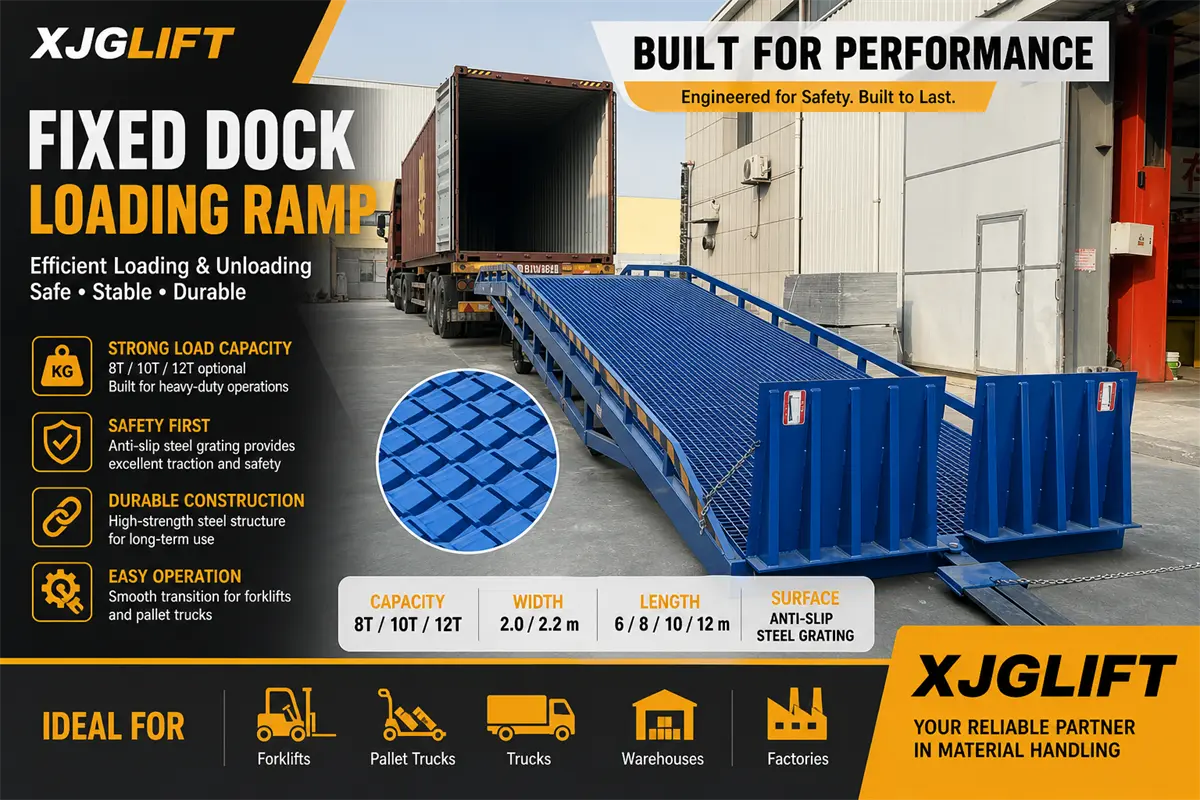
Applications of Truck Loading Ramps
Truck loading ramps appear across a wide range of material handling operations. The common thread is a height difference between the loading surface and the vehicle.
Facilities Without a Permanent Loading Dock
Many warehouses, workshops, and distribution stores operate from buildings that do not have a loading dock. For these facilities, a portable or hydraulic ramp provides the connection between a floor-level doorway and the truck bed. The ramp can be brought into position for each loading event and stored away afterward.
Ground-Level Loading Points
Some operations load trucks at ground level, including construction sites, agricultural facilities, and building material yards. Fixed or portable ramps allow forklifts and loaders to enter trailers from an open area rather than from a raised door opening. In these conditions, the ramp often sits outdoors and must be able to handle dust, rain, and temperature extremes.
Operations with Mixed Vehicle Heights
Distribution operations that receive or dispatch a mixed fleet of vehicles face constantly changing deck heights. Box trucks, flatbed trucks, and trailers all present different heights, and the height of a single vehicle can change as it is loaded and unloaded. Hydraulic ramps are especially useful in this setting because the deck position can be adjusted quickly without manual effort.
Temporary and Relocated Loading Operations
Rental fleets, construction contractors, event logistics providers, and emergency response operations often need loading capability that can be set up in a new location at short notice. Portable ramps are well suited to these situations because they can be transported to a site, positioned with a forklift, and put to work immediately. No permanent installation work is required.
Matching the Ramp Type and Capacity to the Application
Several factors should be reviewed together when deciding which truck loading ramp is appropriate for a specific site.
- Frequency of use. Continuously used ramps justify powered hydraulic adjustment and a higher structural rating. Occasional use can often be handled by a mechanical or portable ramp.
- Equipment and load weights. The combined weight of the heaviest forklift, its payload, and the operator defines the minimum capacity requirement.
- Height difference and ramp length. The difference between the floor level and the highest truck bed determines how long the ramp must be to achieve a workable slope.
- Site space. Portable ramps need storage space when not in use, while fixed ramps require permanent floor or yard space at the loading position.
- Power availability. Hydraulic ramps require an electrical supply; mechanical and portable ramps do not.
- Environment. Outdoor exposure, cold storage conditions, and corrosive atmospheres affect the material and finish options that are appropriate.
- Mobility requirements. If trucks load at multiple points around the site, a portable ramp is likely to serve better than a fixed installation.
FAQ
What is the difference between a truck loading ramp and a dock leveler?
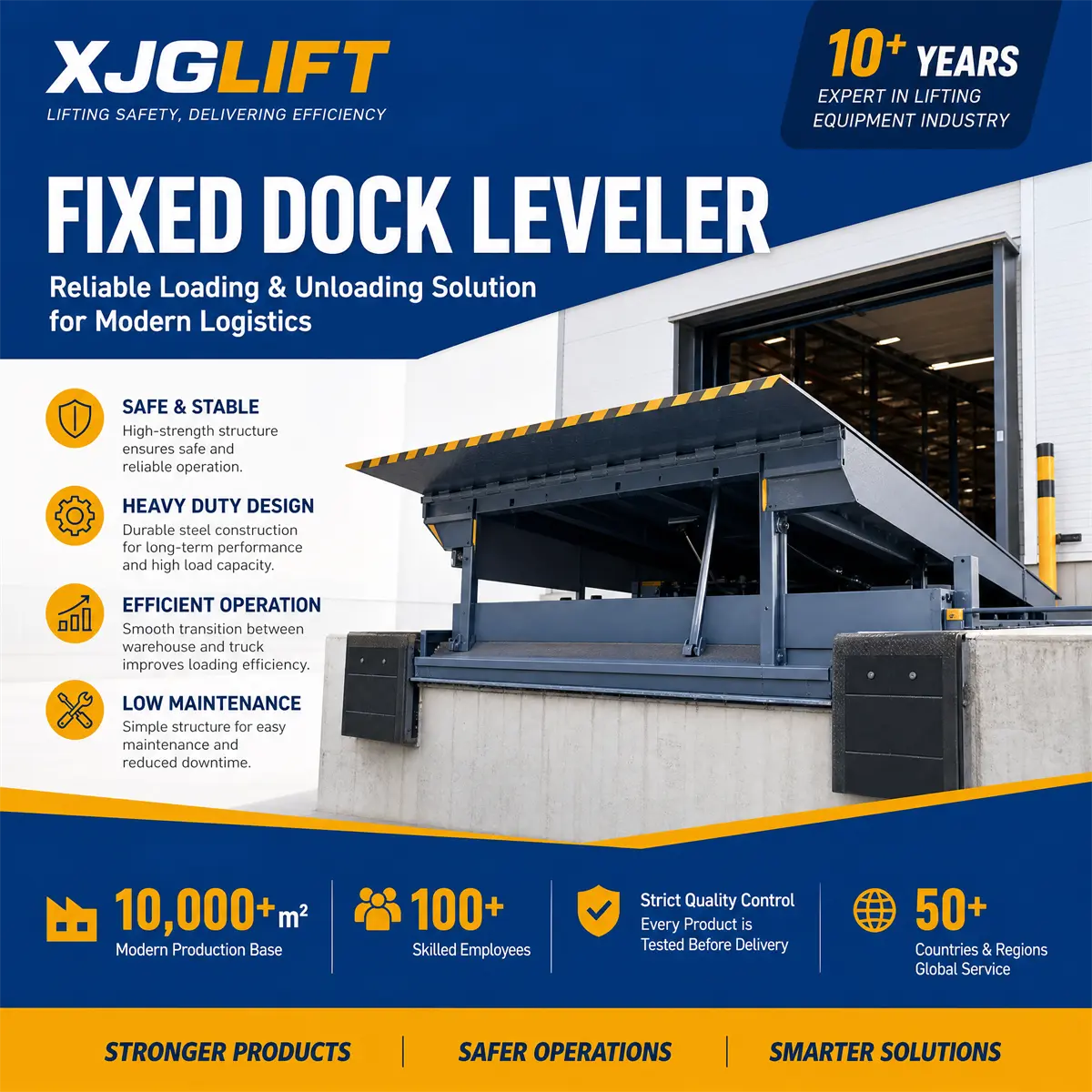
A dock leveler is permanently installed in a dock opening and adjusts within a limited height range to match a truck bed at the dock face. A truck loading ramp bridges a larger height difference and can often be moved or installed independently of a dock structure.
How do I determine the capacity I need for a truck loading ramp?
Calculate the combined weight of the heaviest forklift, its maximum payload, and the operator. Then check the axle load and wheel configuration of the equipment against the ramp’s structural rating, because a concentrated wheel load can exceed a rating that works for a distributed load.
What information should I provide when requesting a quote from a manufacturer?
Provide the types and weights of the equipment that will cross the ramp, the maximum payload weight, the height difference between the loading surface and the truck beds, the range of vehicles in the fleet, frequency of use, available space, and site conditions. This allows the manufacturer to recommend a configuration with the correct capacity and slope.
Conclusion
Truck loading ramps vary in construction, adjustment method, and structural capacity, and each type fits a different set of operating conditions. Portable ramps deliver flexibility for changing sites, fixed ramps provide long-term stability at a single location, hydraulic units speed up operations with mixed vehicle fleets, and manual ramps offer a simple solution for light or occasional duty. Capacity decisions should be based on the combined working load of equipment and payload, with attention to axle loads and slope.
To select a suitable ramp, confirm the heaviest equipment combination, measure the height difference at the loading points, and review the available space and power supply at the site. Providing these details to the manufacturer will produce a ramp specification matched to the actual application.