The key to selecting a warehouse loading ramp (dock leveler) is to accurately match the load capacity, dock conditions, and operating frequency. Choosing solely based on price can lead to safety risks, reduced efficiency, and higher maintenance costs. Below are the essential selection steps:
1. Determine the Core Specifications (Critical Requirements)
Rated Capacity
The rated capacity should be calculated based on the combined weight of the forklift and its maximum load, with an additional 20%–30% safety margin.
For example:
- Forklift weight: 3.5 tons
- Cargo weight: 2.5 tons
- Total load: 6 tons
In this case, an 8–10 ton dock leveler is recommended to prevent hydraulic system overload and premature wear caused by continuous full-capacity operation.
Height Adjustment Range
Measure the actual dock height and the variation in truck bed heights used at your facility.
- Standard adjustment range: approximately ±300 mm
- Facilities serving multiple vehicle types may require a customized adjustment range for greater flexibility.
Platform Dimensions
For safe forklift operation:
- Recommended width: ≥ 2200 mm
- Recommended length: ≥ 3000 mm
Adequate platform size provides sufficient space for forklift maneuvering, steering corrections, and safe loading and unloading operations while minimizing the risk of side slipping.
2. Choose the Appropriate Type Based on Application
Pit-Type Dock Leveler
Installed in a recessed pit and remains flush with the dock surface when not in use.
Best for:
- High-frequency loading operations
- Large logistics centers
- Distribution warehouses
Advantages:
- Maximum durability
- Smooth traffic flow
- Professional appearance
Considerations:
- Higher installation cost
- Longer installation period due to civil construction requirements
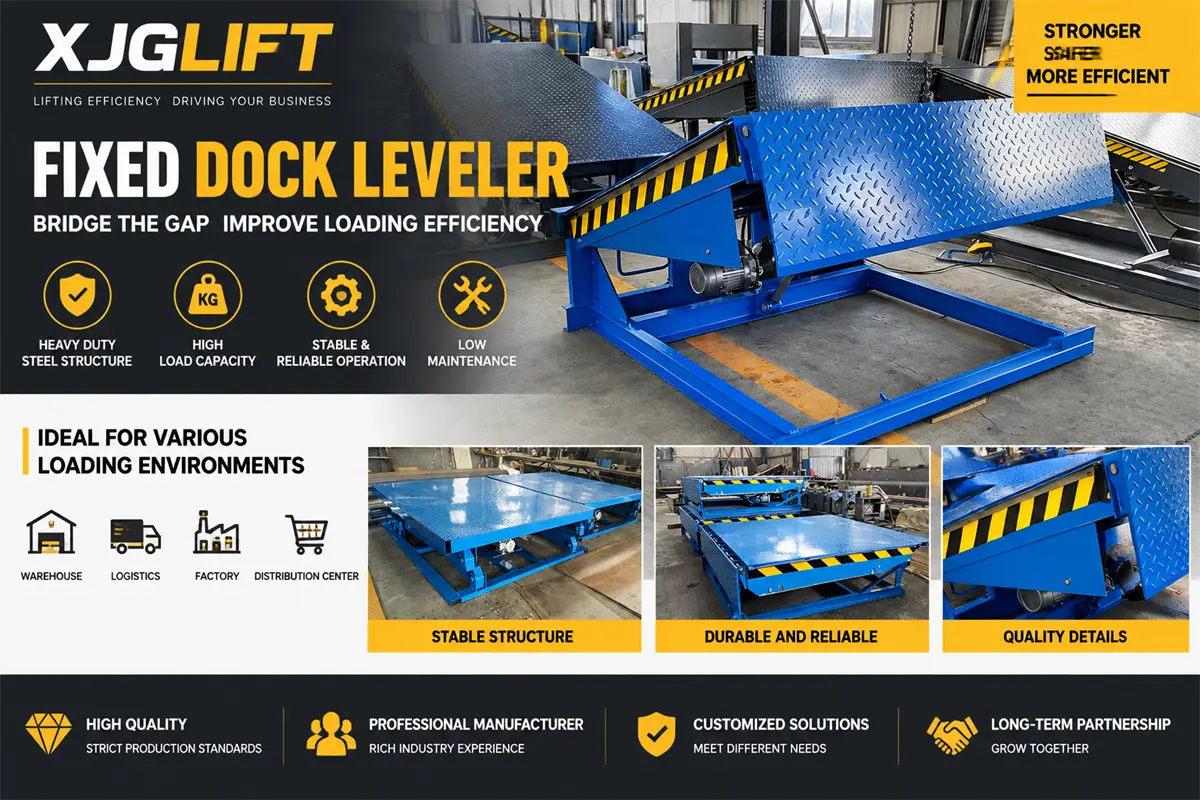
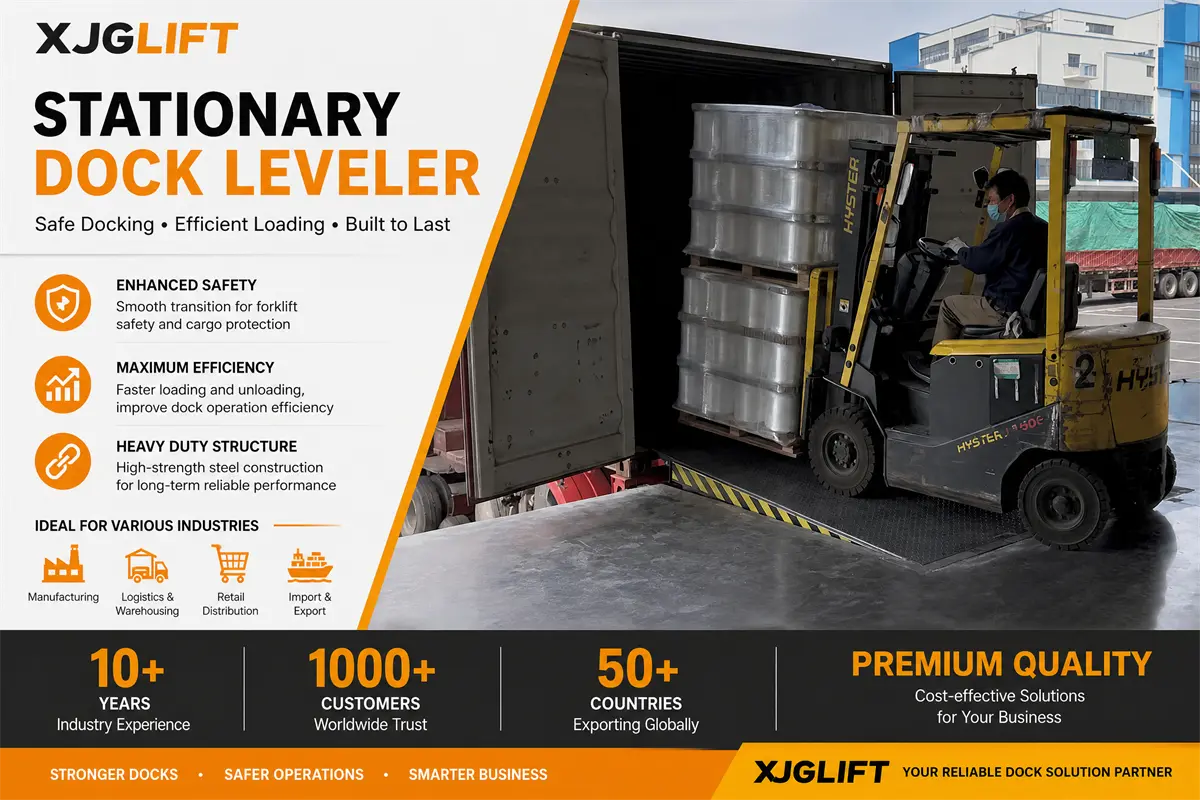
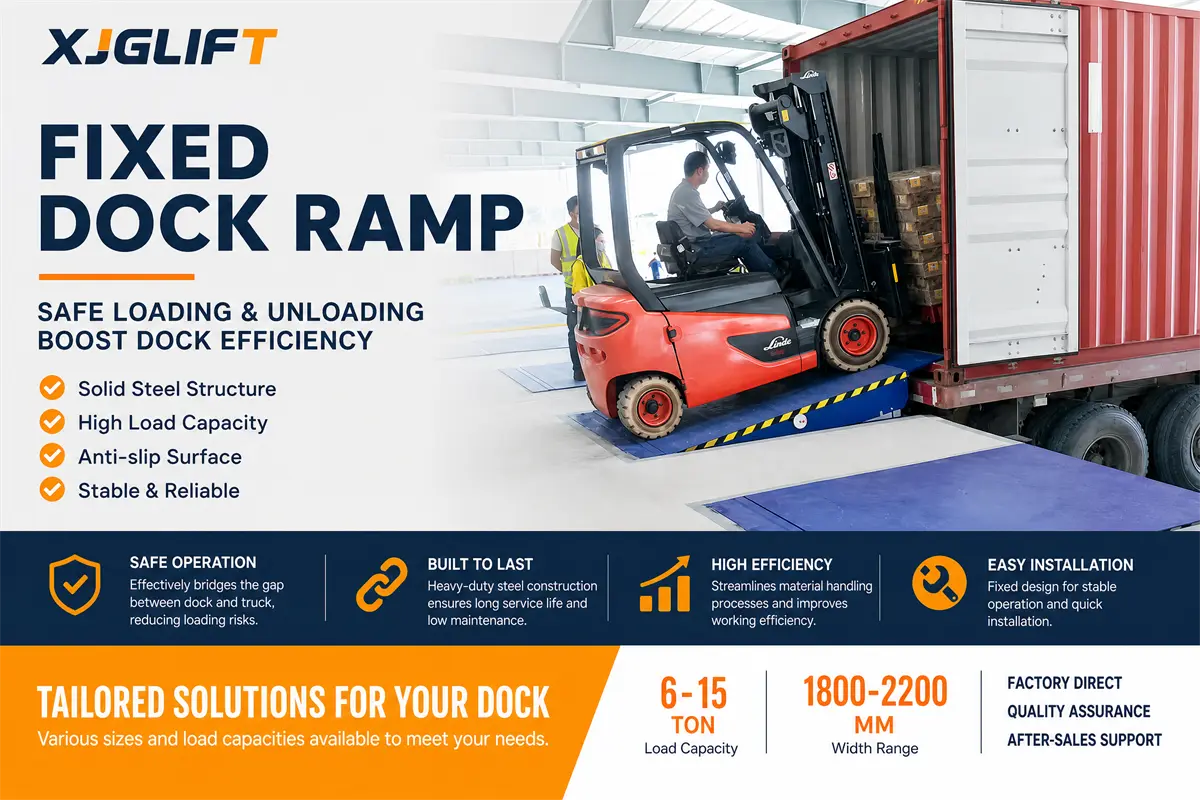
Edge-of-Dock / Fixed Dock Leveler
Mounted directly on the dock edge or floor without the need for a pit.
Best for:
- Warehouses with permanent loading docks
- Businesses with limited installation budgets
Advantages:
- Easy installation
- Cost-effective solution
- Reliable performance
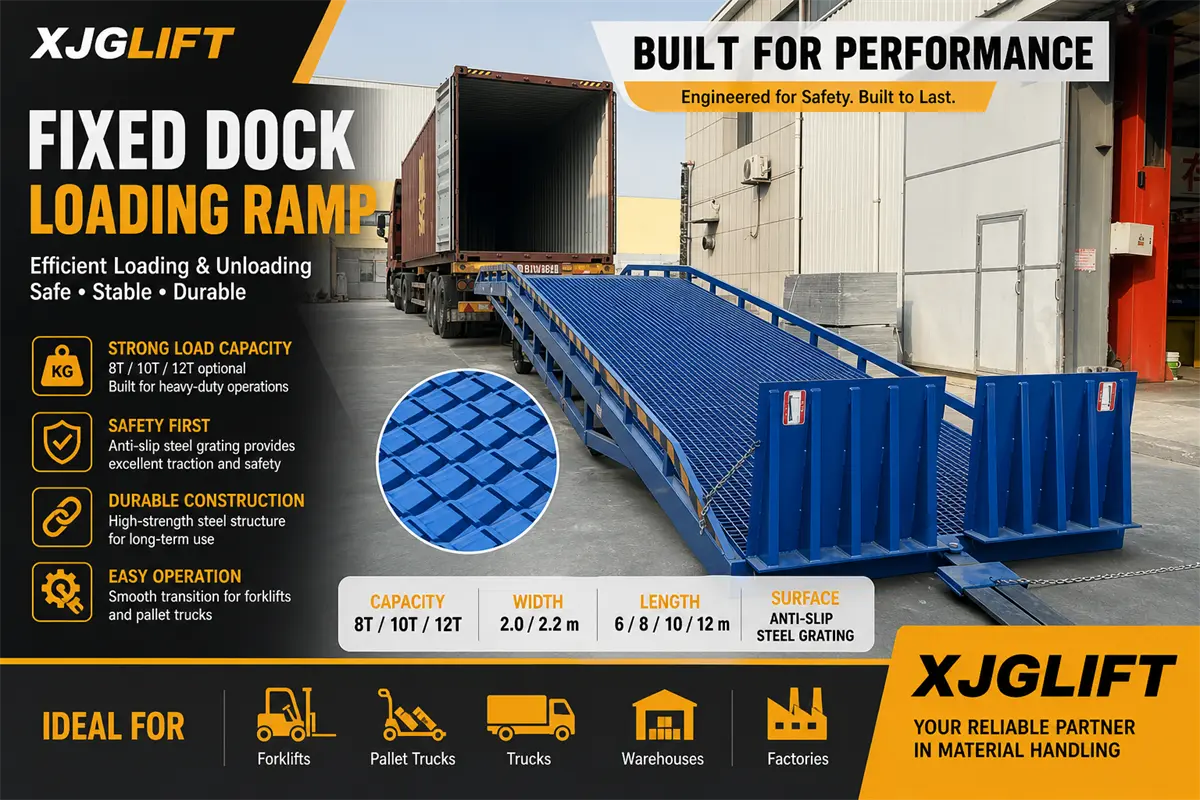
Mobile Loading Ramp
Equipped with wheels for easy relocation and requires no permanent installation.
Best for:
- Facilities without fixed loading docks
- Temporary loading points
- Multiple loading locations
- Restricted workspaces
Advantages:
- High flexibility
- Quick deployment
- No construction work required
Considerations:
- Typically lower load capacities, often below 15 tons
3. Pay Attention to Safety Features and Material Quality
Anti-Slip Surface
The ramp surface should use:
- Checkered steel plate
- Serrated grating
- Other certified anti-slip materials
These surfaces help maintain forklift traction even in rainy or snowy conditions.
Essential Safety Features
A quality dock leveler should include:
- Safety chains
- Finger pinch guards
- Overload protection system
- Emergency manual lowering valve for power outages
In addition, highly visible safety markings or curb edges should be provided to prevent forklifts from accidentally driving off the platform.
Structural Materials
For long-term heavy-duty use, recommended specifications include:
- Main beam thickness: ≥ 6 mm
- Deck plate thickness: ≥ 10 mm
- Full-welded construction instead of spot welding
Robust materials and high-quality welding significantly improve durability and reduce deformation under heavy loads.
4. Consider Environmental Conditions
Cold Climate Applications
For low-temperature environments, choose equipment equipped with:
- Low-temperature hydraulic oil
- Cold-resistant hydraulic components
Coastal and Humid Environments
To prevent corrosion, ensure the steel structure is protected with:
- Electrophoretic coating (E-coating)
- Hot-dip galvanizing
- Industrial-grade anti-corrosion paint systems
These treatments help extend service life in harsh operating conditions.
Common Mistakes to Avoid
Before purchasing, always conduct on-site measurements of dock heights and vehicle bed heights rather than relying on estimates.
Avoid undersized equipment. A practical rule is to select a dock leveler with a capacity approximately 120% of your actual operating requirements. This safety margin improves reliability, extends equipment lifespan, and reduces maintenance costs over time.
By carefully evaluating load requirements, dock conditions, operating frequency, safety features, and environmental factors, you can choose a warehouse loading ramp that delivers safe, efficient, and long-lasting performance.