Not every facility has a permanent loading dock. Warehouses with ground-level access, distribution yards, container depots, and temporary worksites all face the same challenge: getting a forklift safely into a trailer that sits well above ground level. A truck loading ramp closes that height gap so lift trucks, pallet jacks, and other wheeled equipment can drive straight into the trailer. But ramps are not interchangeable. Capacity, slope, deck width, and the way the ramp is positioned all change how it performs in a specific operation. This guide explains the common types, how capacity ratings actually work, and the specifications worth checking before you buy.
What Is a Truck Loading Ramp?
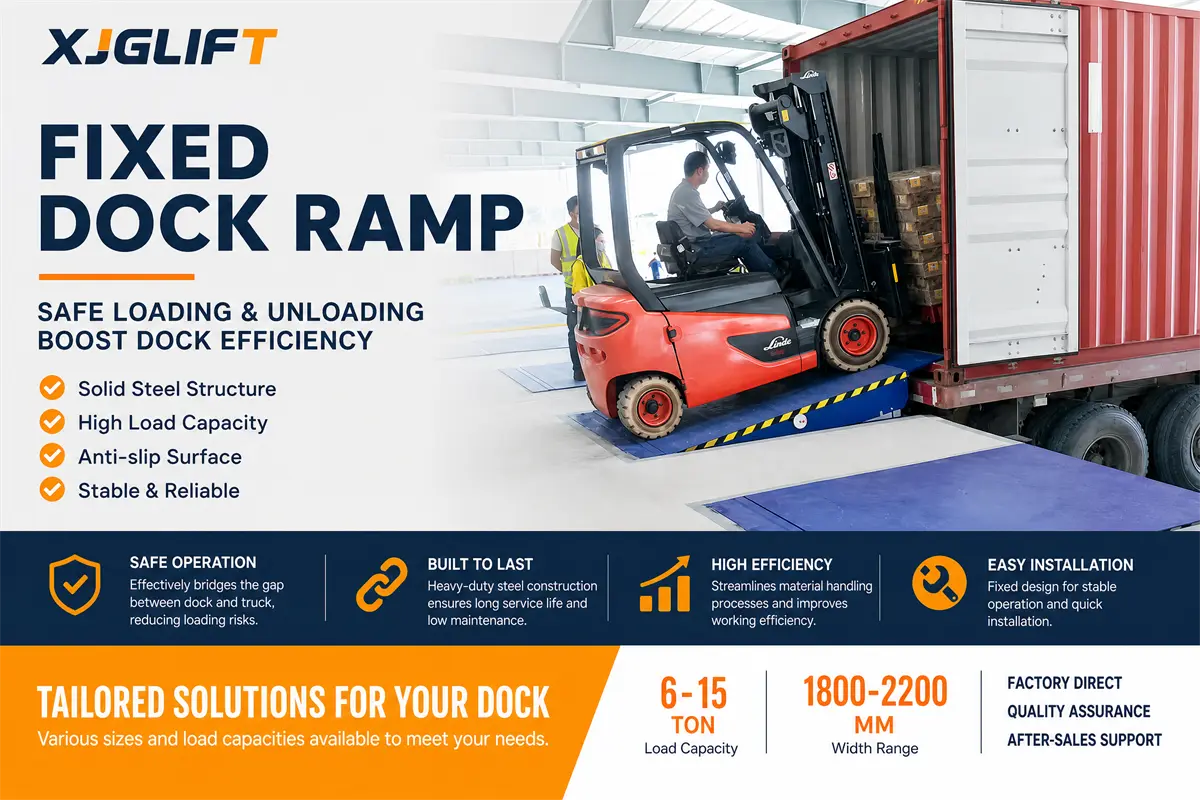
A truck loading ramp is an inclined steel bridge placed between the ground, a low dock, or a loading platform and the rear of a truck or trailer. It lets material handling equipment drive from a lower level up into the trailer bed and back down again.
The basic structure is fairly consistent across most designs:
- A steel deck with a traction surface
- A transition lip that rests against the trailer floor
- Support legs or an undercarriage frame
- A lifting mechanism — usually hydraulic — to raise and lower the ramp
- Wheels, fork pockets, or a tow hitch for repositioning
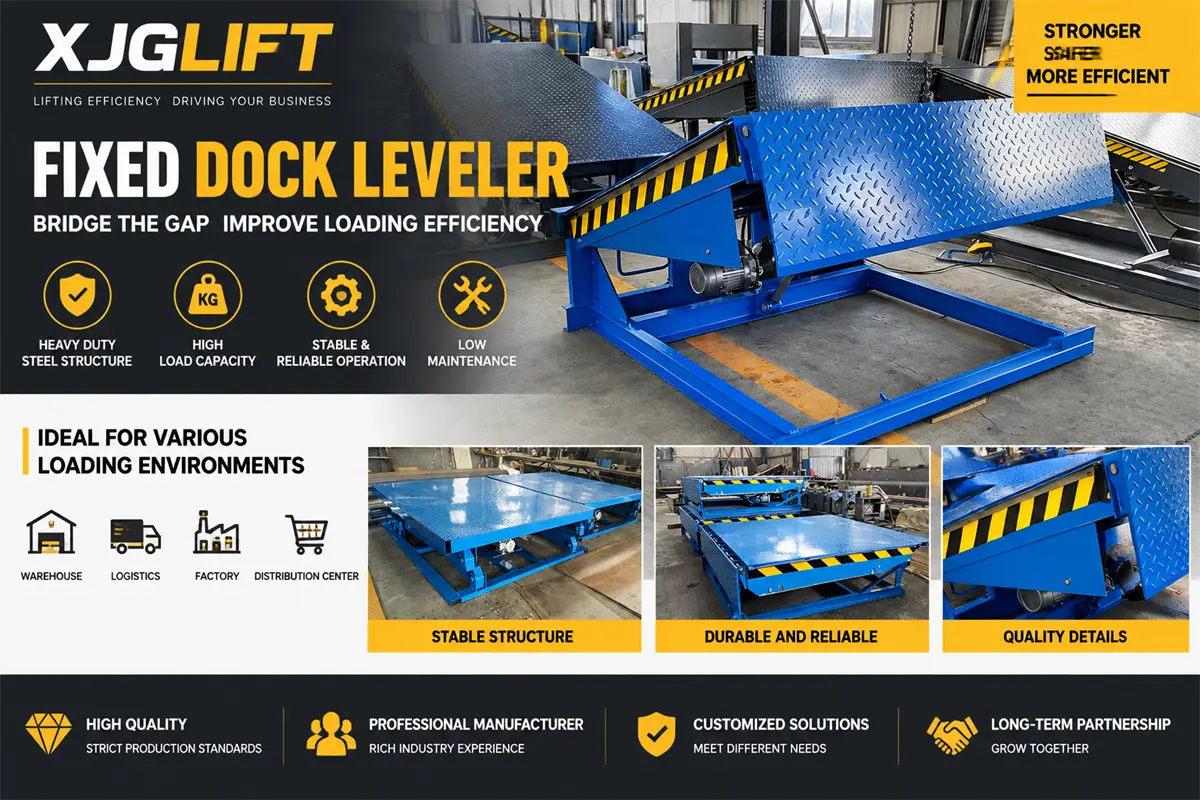
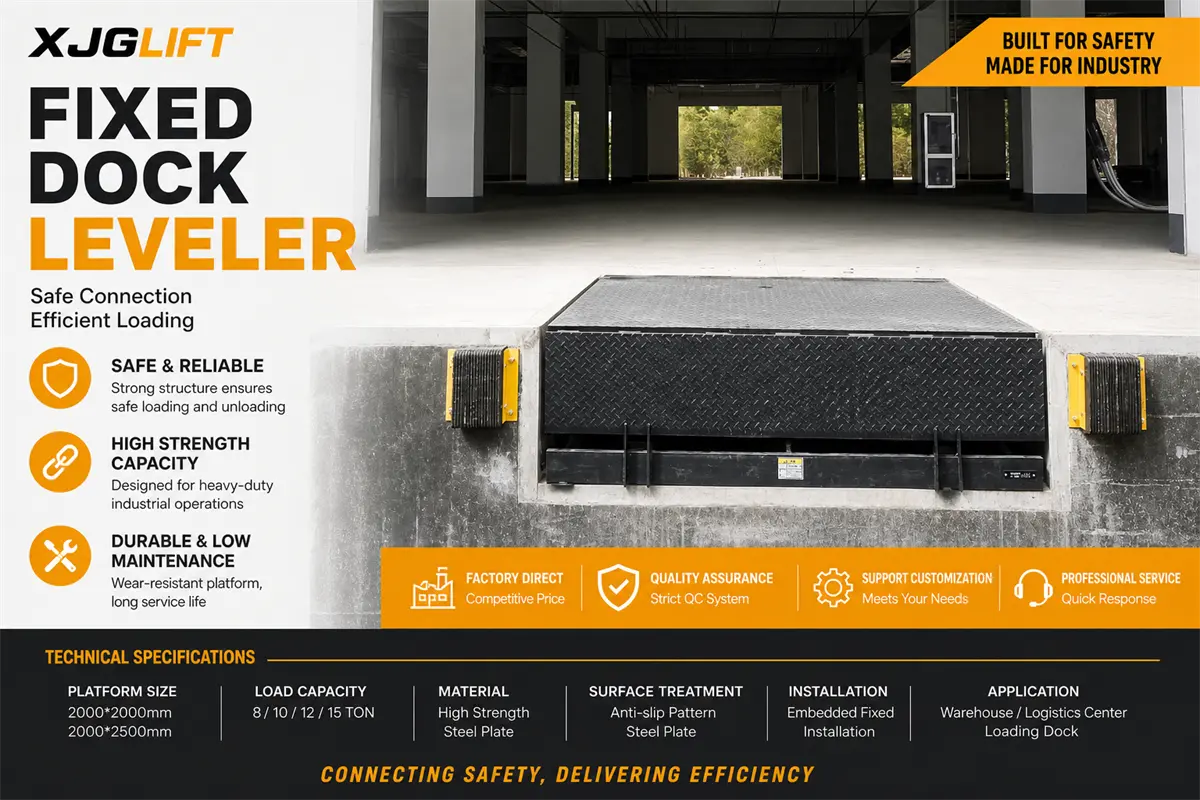
A truck loading ramp is not the same as a dock leveler. A dock leveler is permanently installed into the face of a loading dock and bridges the gap between the dock and the trailer. A truck loading ramp, by contrast, is typically self-contained, can be moved from door to door, and works from ground level. The two solve different site problems, which is why many facilities keep both on hand.
Main Types of Truck Loading Ramps
Although the term “truck loading ramp” is sometimes used loosely, the equipment on the market falls into a few distinct categories. Choosing the right category early makes the rest of the specification process much simpler.
Mobile Yard Ramps
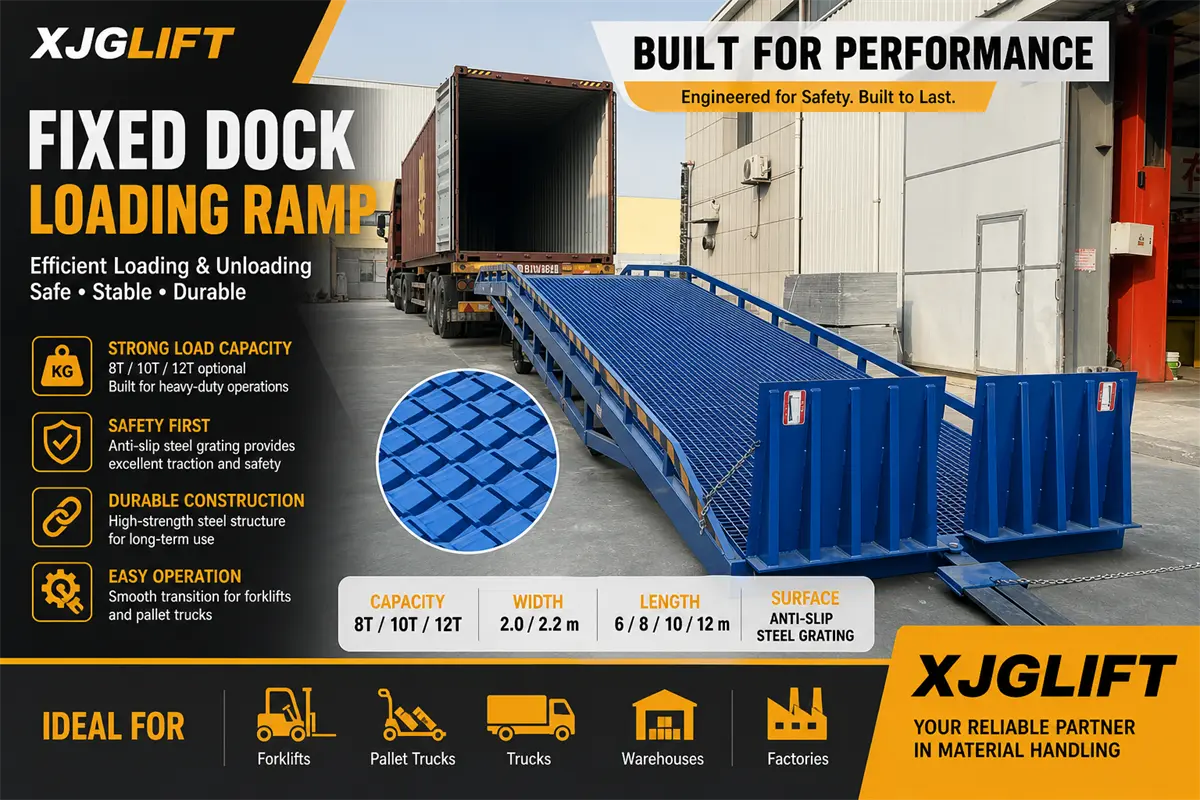
Mobile yard ramps — also called yard ramps, container ramps, or portable dock ramps — are the most common solution for ground-level truck loading. They are freestanding steel ramps mounted on wheels. A hydraulic system raises and lowers the ramp so the lip sits at exactly the right height on the trailer bed.
A facility positions the ramp behind a parked trailer, adjusts the height with the hydraulic lift, and a forklift can then travel up the incline and into the container. Because the ramp can be moved, one unit can serve multiple dock doors or loading bays. In most cases it is repositioned with a forklift, though some models are designed to be towed.
Mobile yard ramps are the preferred choice where:
- There is no permanent loading dock
- Trailers are loaded from several different doors or yard locations
- The operation handles container loading or unloading
- The site needs a solution that can be moved if operations change
Portable Loading Ramps and Dock Boards
Portable loading ramps and dock boards are lighter, simpler units. They are typically positioned by hand or with a pallet jack and hook over the trailer edge using a formed lip. There is no hydraulic system and no permanent installation.
This type suits lower-frequency operations, lighter loads, and equipment like hand pallet trucks, walkie stackers, or small counterbalance forklifts. Because they are removed after each shift, they also give you more flexibility in a shared or temporary facility. The trade-off is that they are not designed for continuous, heavy forklift traffic, and the load capacities are generally lower than those of mobile yard ramps.
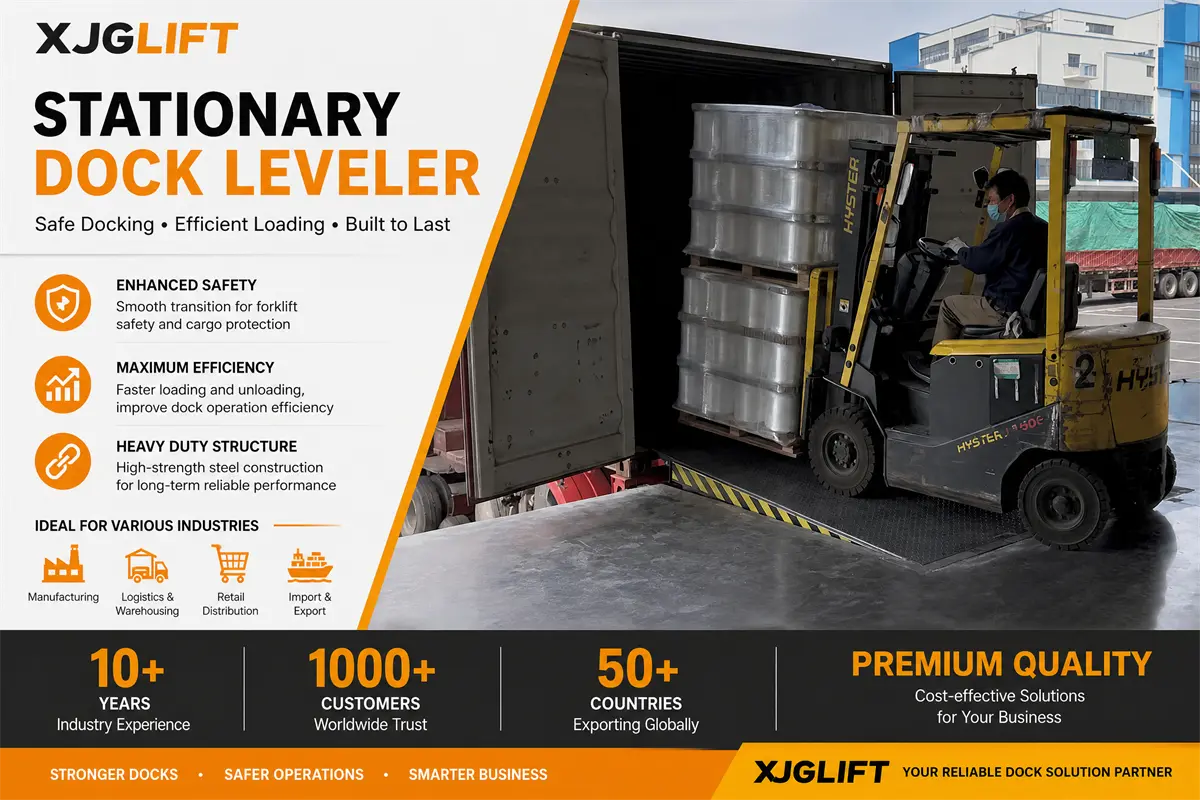
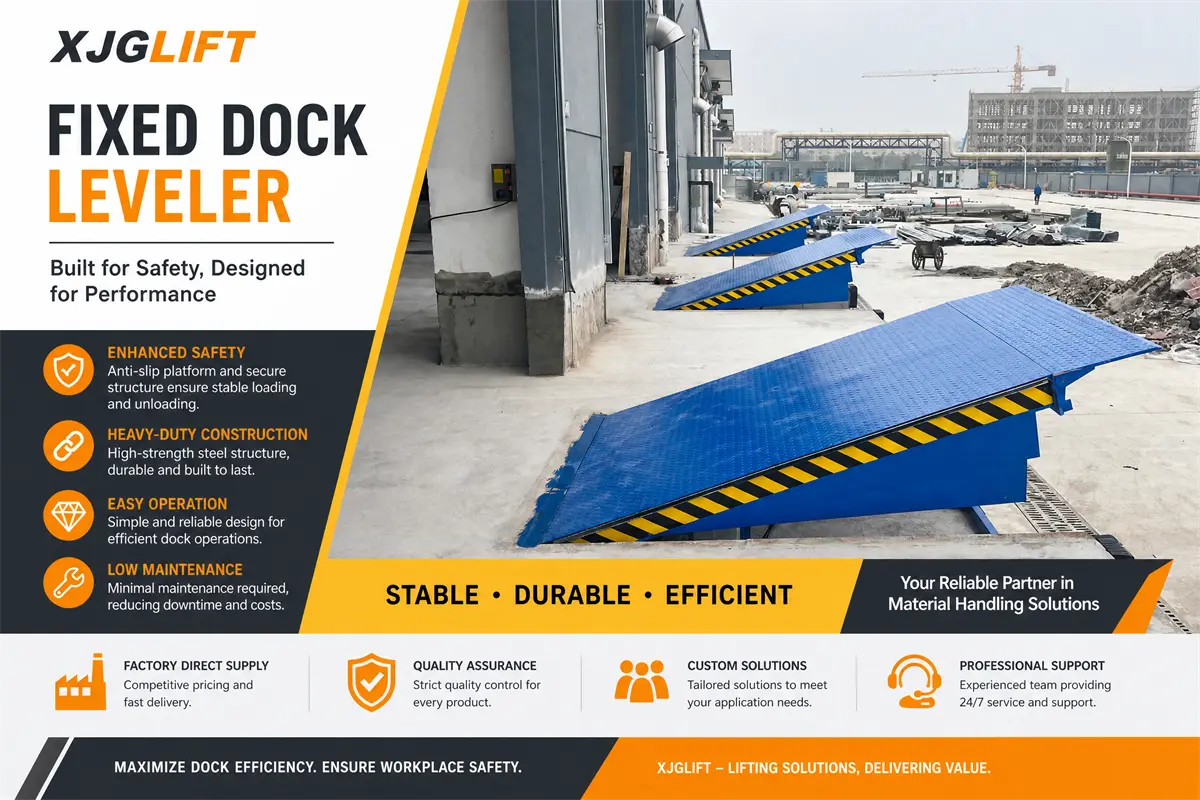
Stationary and Semi-Fixed Ramps
Some facilities have a fixed ground-level bay where trailers always park in the same position. In that case, a stationary ramp can be anchored permanently to the concrete or built into the loading area. These ramps are often shorter than mobile units because the deck height is fixed or only minimally adjustable.
Stationary ramps are worth considering when the trailer fleet is consistent, peak volumes justify a permanent installation, or the facility simply needs a safe walkway and light equipment access. They cost less to maintain over time than hydraulically operated mobile units, but they give up flexibility entirely.
Drive-On Vehicle Ramps
A separate category, often confused with forklift loading ramps, is the drive-on vehicle ramp used to drive trucks, cars, or construction machinery onto a trailer or lowbed. These carry wheel loads rather than distributing weight over a deck, and they are built to very different standards.
If the equipment being loaded is the truck itself — rather than cargo being moved into a trailer by forklift — make sure the ramp you look at is designed for vehicle drive-on loading. The capacity logic is not the same as for forklift traffic.
| Ramp Type | Positioning | Typical Use | Best For |
|---|---|---|---|
| Mobile yard ramp | Moved hydraulically or by forklift | Ground-level forklift loading of trailers and containers | Multi-door sites, no dock, varied trailer heights |
| Portable ramp / dock board | Manual placement | Pallet trucks, light forklift traffic | Low-frequency or temporary operations |
| Stationary ramp | Fixed installation | Repeat loading at a known location | Dedicated ground-level bays, consistent trailer fleet |
| Drive-on vehicle ramp | Portable or fixed | Loading trucks or machines onto trailers | Vehicle transport, lowbed loading |
How Truck Loading Ramp Capacity Is Rated
Capacity is the specification buyers tend to look at first, and it is also the one that gets misinterpreted most often.
The rated capacity on a loading ramp refers to the working load, usually expressed in pounds or kilograms, that the manufacturer has calculated and tested the ramp to support during normal use. However, a rating assumes specific load conditions. A forklift is not a static, uniformly distributed load. The weight is concentrated through the forks, the mast, and the wheels. When the machine travels up an incline, load transfer puts additional force on certain points of the deck.
Before you compare models, clarify the following with the manufacturer:
- Whether the rated capacity is based on a uniform load or on wheel loads
- What the single-axle and single-wheel capacities are
- What deflection is acceptable under maximum load
- Whether the ramp has been load-tested and whether test documentation is available
In practice, the capacity you need is not just the weight of the goods. The total operating weight includes the forklift itself, the load on the forks, any attachments, and the operator. As a rule of thumb used across the industry, adding the rated capacity of the forklift to the heaviest pallet you carry gives you a starting point. But the dynamic forces of driving up an incline, braking, and turning mean the ramp should be rated comfortably above that combined figure. The manufacturer’s recommendation should always be based on the actual equipment combination.
Key Specifications to Check Before Buying
Working capacity is only one part of the specification. Several other dimensions and features determine whether a ramp will work safely and efficiently on your site.
Usable Deck Width
The usable width — the width of the deck inside the side curbs — must clear the widest forklift, pallet, or load you will move. Measuring only the bare forklift width is a common mistake; the load can be wider than the truck. Manufacturers offer standard widths and can typically build custom widths to match the application. If you plan to move long or oversized loads, width becomes a more important factor than overall ramp length.
Ramp Length and Gradient
The length of the ramp determines the slope, and the slope determines how easily a forklift can climb it. A steeper gradient means a shorter, cheaper ramp — but it also means reduced traction, slower cycle times, and a higher risk of the load shifting or the forklift losing control on the way down.
Slope is expressed as the rise over the run, usually as a percentage or an angle. A ramp that needs to bridge a 48-inch trailer bed height will need a significantly longer deck at a gentler slope than a ramp bridging 24 inches. As a general guide, shallower is always better for loaded forklift traffic. If the site has very limited space and the slope comes out steep, this is a strong reason to reconsider the ramp type or the parking position of the trailer.
Height Adjustment Range
Different trailers sit at different bed heights. A loaded trailer sits lower because the suspension compresses; an empty trailer rides higher. Check the height range your ramp can cover and compare it against the full range of trailers in your fleet — including any you may add in the future. Mobile yard ramps use hydraulic cylinders to adjust continuously, so the lip can be set to the exact height of each trailer.
Deck Surface and Edge Curbs
The deck surface must provide reliable traction even when the forklift is wet, dusty, or carrying a slippery load. Open steel grating is common because it sheds debris, snow, and moisture while still giving the tires grip. Edge curbs along both sides prevent wheels from running off the deck, which is a critical safety feature when a forklift is traveling through a narrow ramp opening at height.
Lift Mechanism and Controls
Mobile yard ramps typically come with either a manual hand pump or a battery-powered hydraulic power unit for raising and lowering the deck. A hand pump is adequate for occasional use and requires no electrical maintenance. For daily, multi-shift operations, a power unit is faster and reduces wear on the operator. Some models also allow the ramp to be raised vertically for storage or to be tilted for easier positioning against the trailer.
Mobility and Positioning
If the ramp will serve multiple doors, check how it is moved. Fork pockets allow it to be lifted and relocated by a forklift. Towable models have a trailer hitch and wheels that make road movement possible. In both cases, the ground surface matters. Soft or uneven yard surfaces make positioning difficult and can affect how well the ramp settles under load.
Buying Guide: Matching the Ramp to the Operation
The “right” ramp is the one matched to your actual loads, site, and traffic pattern. Work through these points before requesting a quote.
Define the load profile. List every forklift in the operation, its empty weight, its rated capacity, and any attachments. Then identify the heaviest load those trucks carry. The ramp must handle the worst realistic combination, not the average one.
Survey the site. Measure the height difference between the ground or loading surface and the trailer beds you use. Note the available approach space in front of the loading position — a longer ramp needs more room to set up. Check whether the ground is paved, compacted gravel, or exposed earth.
Understand the trailer fleet. Record the bed heights of every trailer type, both loaded and empty. If you use containers with forklifts, confirm the door width of the container as well. The ramp’s usable width and lip design must suit the narrowest and widest units.
Assess frequency and duty cycle. A ramp used twice a week has very different demands from one used continuously across three shifts. Frequency affects the choice of hydraulic system, deck construction, and how much maintenance you should plan for.
Ask for documentation. A responsible manufacturer will provide capacity ratings, load-test certificates, welding and material specifications, and clear safety markings. If a supplier cannot explain how the capacity was determined, that is a red flag.
Plan for customization. Most reputable manufacturers will adjust ramp width, length, height range, and finish — such as hot-dip galvanizing for outdoor environments — to match the application. Customization is normal in this product category, not a special exception.
Confirm after-sales support. Replacement parts for the lip, pump, seals, and rollers are consumable items. Confirm that spares are available and that the manufacturer can support the model you choose over the long term.
Common Mistakes in Truck Loading Ramp Selection
The most frequent purchase errors we see in the field are not about brand — they are about misreading the application.
- Basing capacity only on the weight of the goods, ignoring the weight of the forklift and attachments
- Choosing a ramp too short to keep the slope reasonable
- Assuming all trailers have the same bed height
- Overlooking the gap between the ramp lip and the trailer floor, which can catch fork wheels
- Selecting a narrower deck to save cost, then discovering that loaded pallets overhang the edges
- Buying a fixed ramp for a site where operations will likely be reconfigured
Safety and Maintenance Considerations
A loading ramp is only safe if it is used within its rated capacity and kept in good condition. A few points matter more than others:
- Always chock the trailer wheels before loading begins
- Keep personnel clear of the ramp while a forklift is on it
- Enforce a slow, steady speed limit on the incline
- Inspect the deck, welds, lip, and hydraulic system on a regular schedule
- Keep the surface free of oil, ice, mud, and debris
- Follow the manufacturer’s recommended load-test intervals
Hydraulic components need periodic attention — oil levels, cylinder seals, and hose condition should be checked routinely. The ramp deck, being the most heavily contacted surface, should be inspected for bent grating, worn traction, and damaged curbs. In humid or outdoor environments, galvanized or painted surfaces reduce corrosion; damaged coatings should be repaired promptly.
FAQ
Is a yard ramp the same as a truck loading ramp?
In most cases, yes. “Yard ramp,” “container ramp,” and “truck loading ramp” are commonly used names for the same product: a mobile, height-adjustable ramp used to load trucks from ground level. Local industry usage varies, so confirm the exact equipment configuration with the supplier.
How steep can a loading ramp be for a forklift?
It depends on the forklift type, its drive configuration, and whether it is loaded. Loaded forklifts lose traction and stability on steep grades. A shallower slope is always safer; if the available space forces a steep incline, discuss the application with both the ramp manufacturer and the forklift supplier before finalizing the design.
Do I need a mobile ramp if I already have a loading dock?
A permanent dock with a dock leveler covers the trailer positions that back up to the building. A mobile truck loading ramp becomes useful when trailers must be loaded away from the dock — at a ground-level door, in the yard, or at a container staging area. The two are complementary rather than interchangeable.
How long does a truck loading ramp last?
Service life depends on build quality, duty cycle, environment, and maintenance. Ramps made from structural steel with proper coatings and maintained per the manufacturer’s schedule typically provide many years of service. Ask the supplier for specific material and welding specifications rather than relying on general claims.
Final Buying Checklist
Before you contact a manufacturer, prepare this information:
- Maximum operating weight of your heaviest forklift/load combination
- Usable width required by your widest forklift and load
- Trailer bed heights, loaded and unloaded, for every trailer type
- Ground conditions and available approach space at the loading position
- Expected frequency of use
- Whether the ramp needs to be moved between locations
- Any environmental conditions — outdoor exposure, rain, snow, coastal air — that affect coating choices
A truck loading ramp is a straightforward piece of equipment, but the difference between a safe, efficient installation and a costly one is decided before the order is placed. Match the type to the site, size the capacity to the actual equipment, and make sure the manufacturer provides the documentation to back up the rating. Do that, and the ramp becomes a reliable workhorse for years.