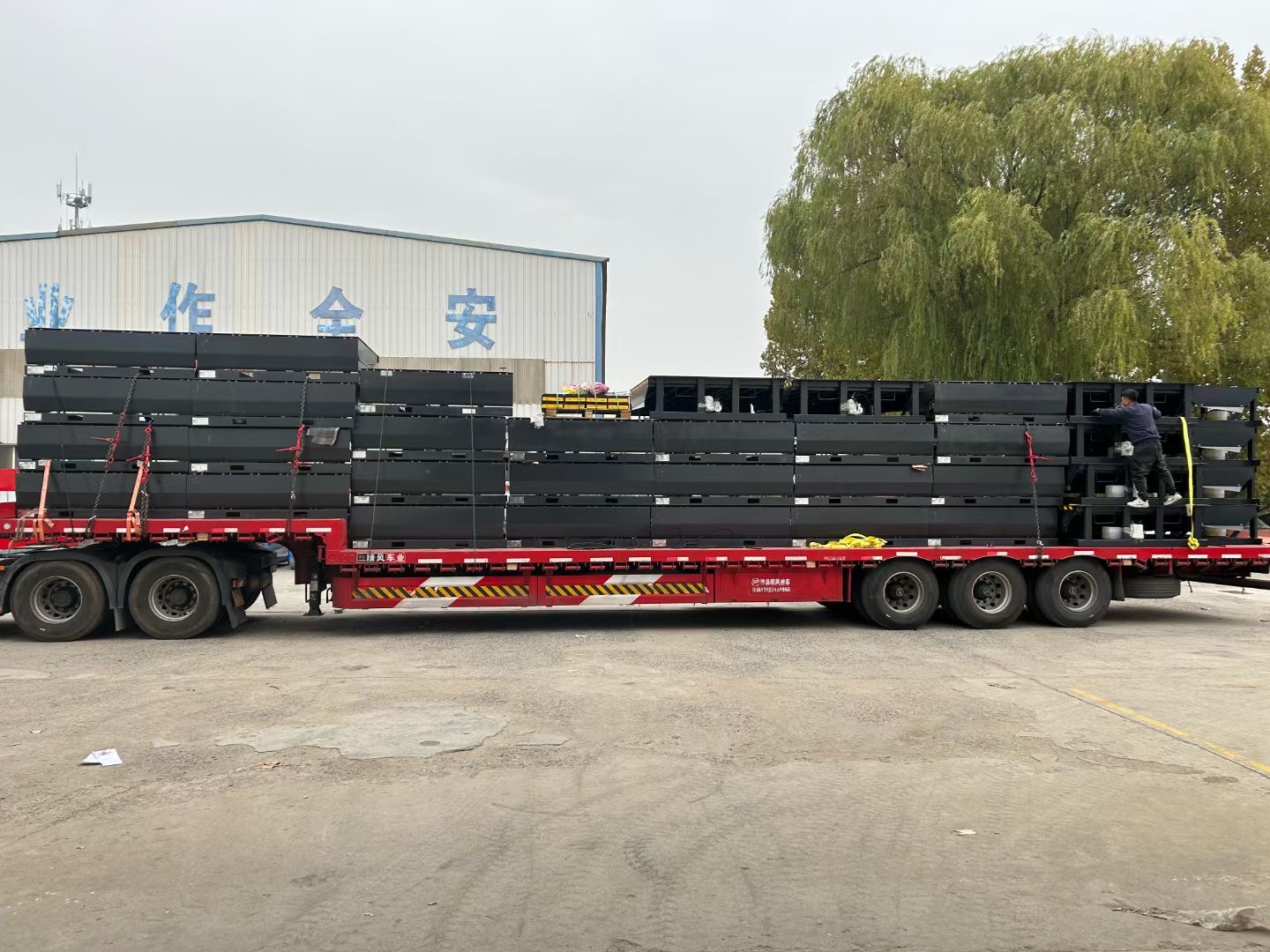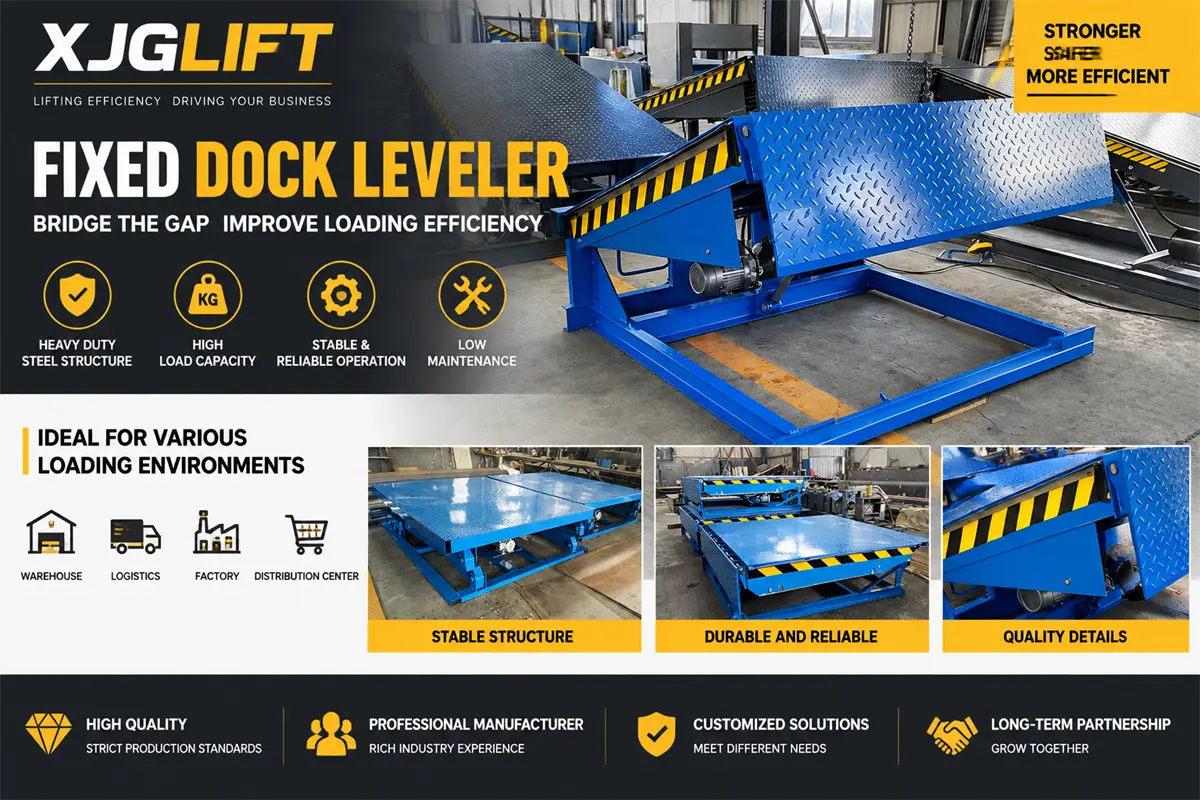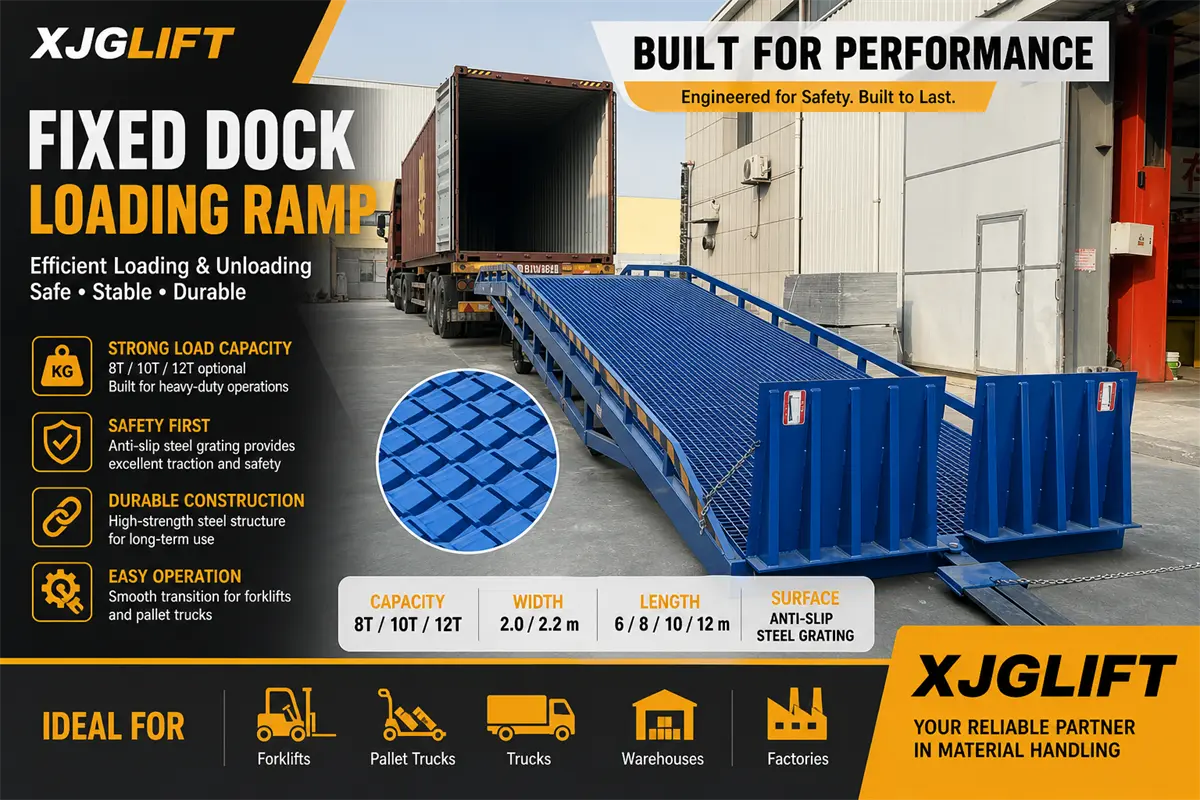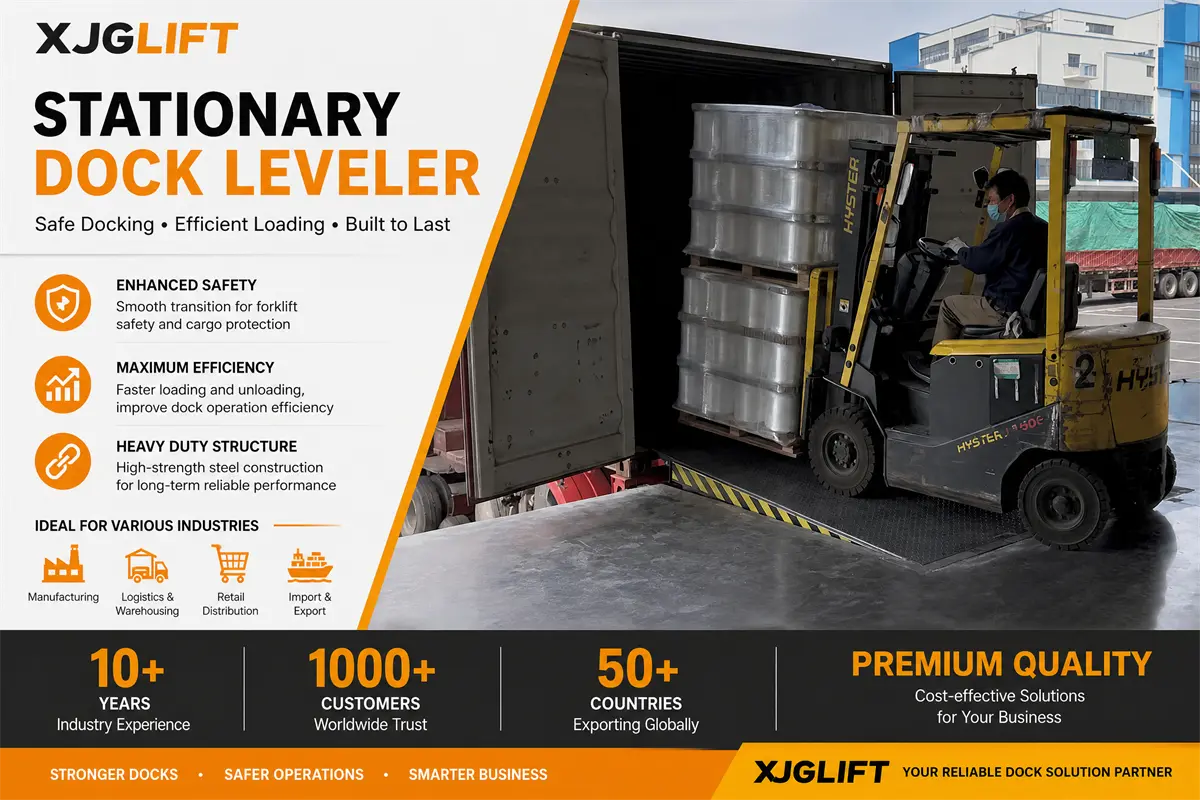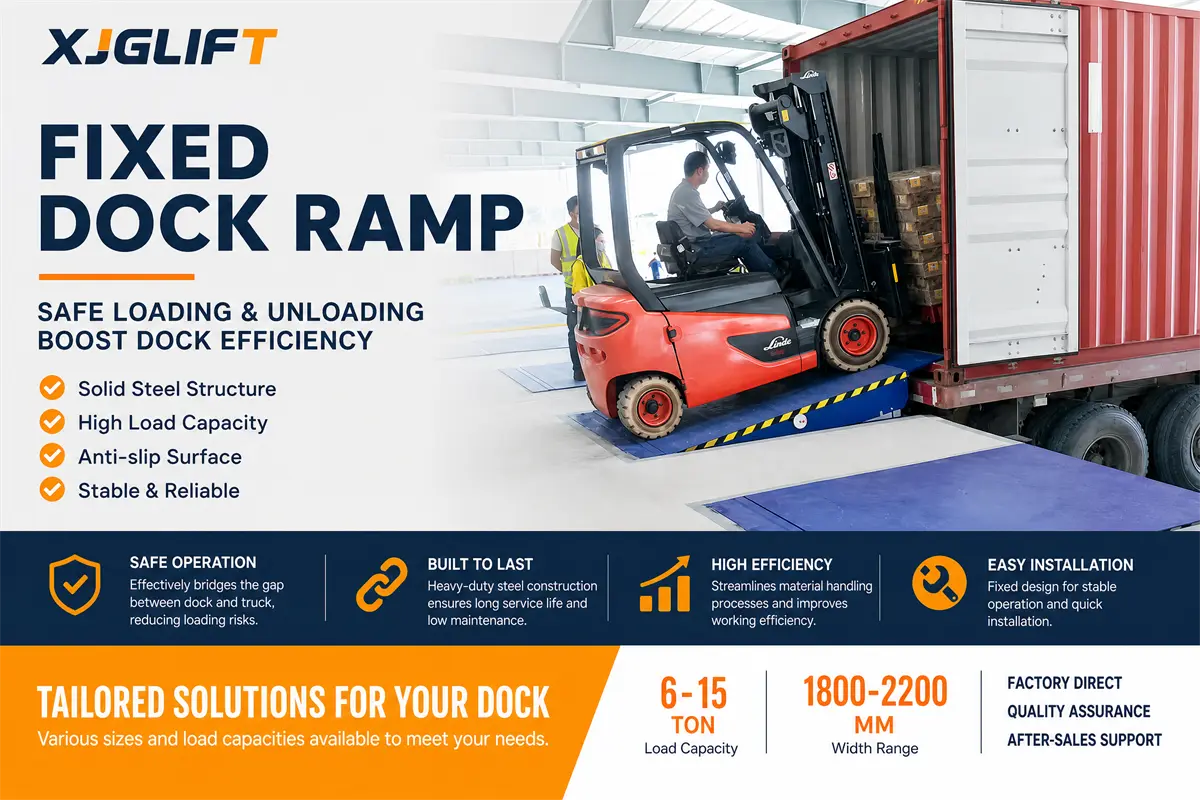
40-foot container loading and unloading does not require a specific “size” loading ramp, as a standard 40-foot container (12.192 meters long and 2.438 meters wide) is typically handled directly by reach stackers, forklifts, or quay cranes. Loading ramps (platform ramps) are only used for cargo handling between the truck bed and the fixed platform, and their selection is based on the truck bed dimensions, not the container itself.
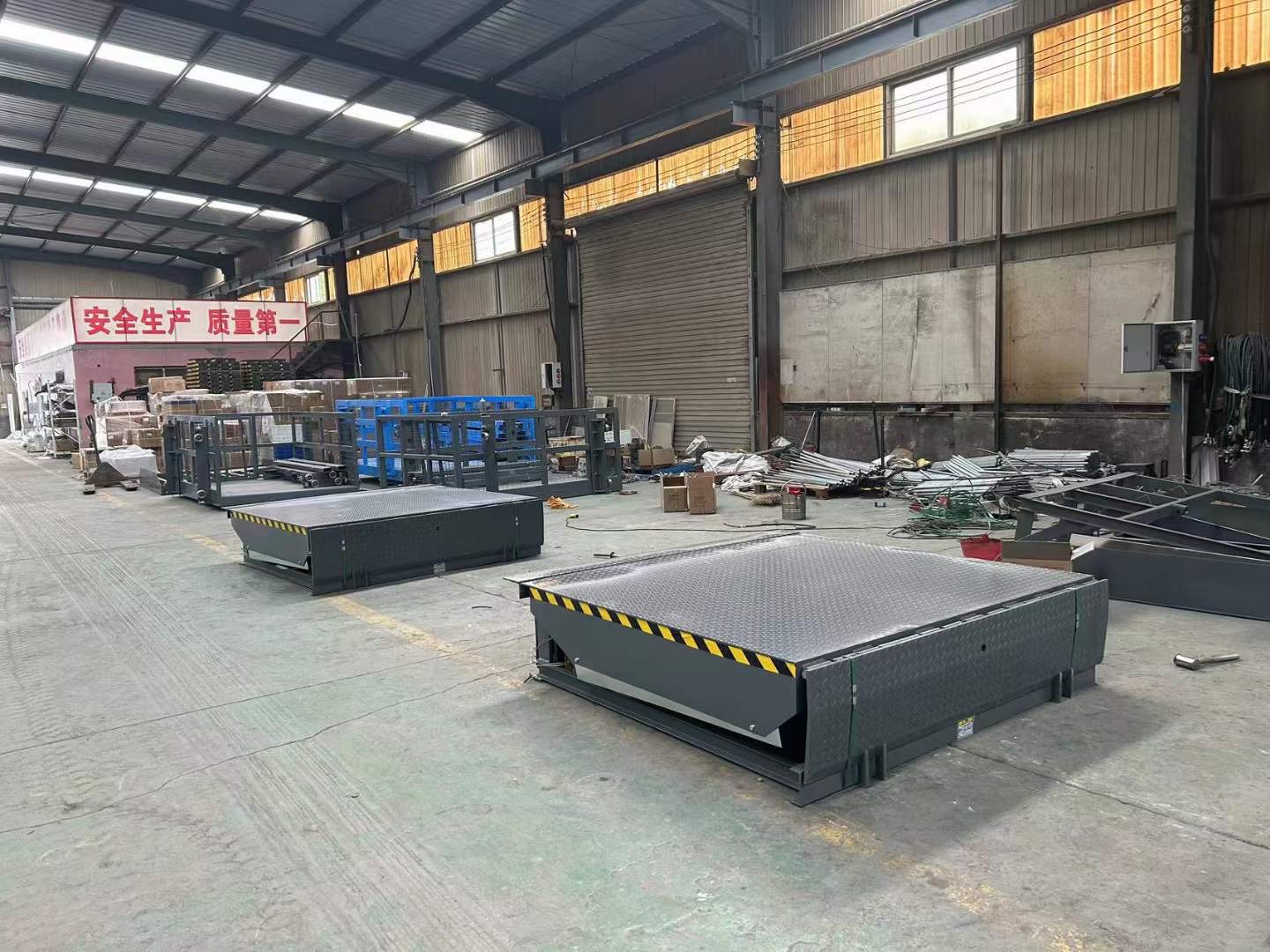
Key Selection Parameters
Load Capacity: The ramp must match the axle load of a fully loaded 40-foot container truck. It is recommended to choose a heavy-duty loading ramp (such as 10T or 12T specifications) with a static load capacity ≥ 10 tons and a dynamic load capacity ≥ 8 tons to handle the concentrated load of a three-axle semi-trailer.
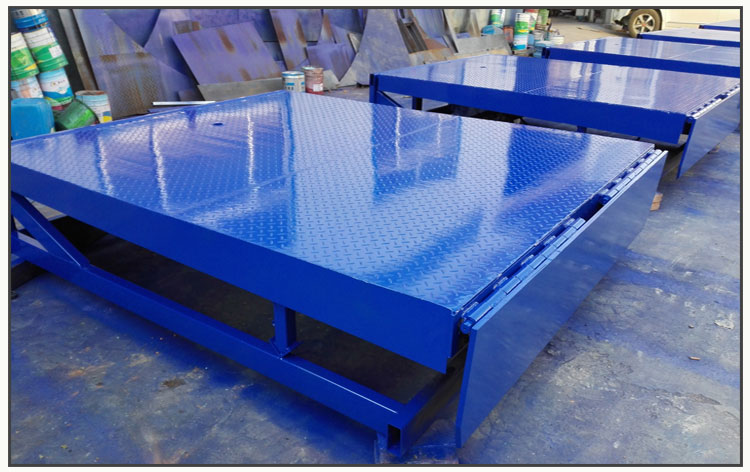
Railing Deck Width: The standard truck bed width is approximately 2.48-2.55 meters. The effective width of the loading ramp should be ≥ 2.1 meters (common specifications are 2.1m/2.2m) to ensure safe forklift passage without suspension.
Adjustment Range: The vertical adjustment stroke must cover the platform height difference (typically -200mm to +400mm) to accommodate container semi-trailers with different chassis heights. Key Considerations:
Platform Height Matching: The standard logistics platform height in China is mostly 1.2m-1.3m. When purchasing, ensure the “overlap height” of the loading ramp matches this to avoid excessive slope affecting forklift efficiency.
Safety Redundancy: Given that a 40-foot container can weigh over 30 tons, it is essential to choose a hydraulic or mechanical heavy-duty loading ramp with safety support bars, anti-slip grooves, and limit devices. In short, select a heavy-duty loading ramp of 10 tons or more and a width of 2.1 meters or more based on the width of the truck bed and the platform height, not based on the container length.