Two electric scissor lifts can look identical in a catalog photo and still behave very differently on a warehouse floor — one cycles 60 times a shift for years, the other overheats by month four. For distributors buying by the container, knowing where that gap comes from is the difference between repeat orders and a pallet of warranty claims. This guide, written from the manufacturing side, walks through the specs that decide quality and the sourcing checks that protect your margin.
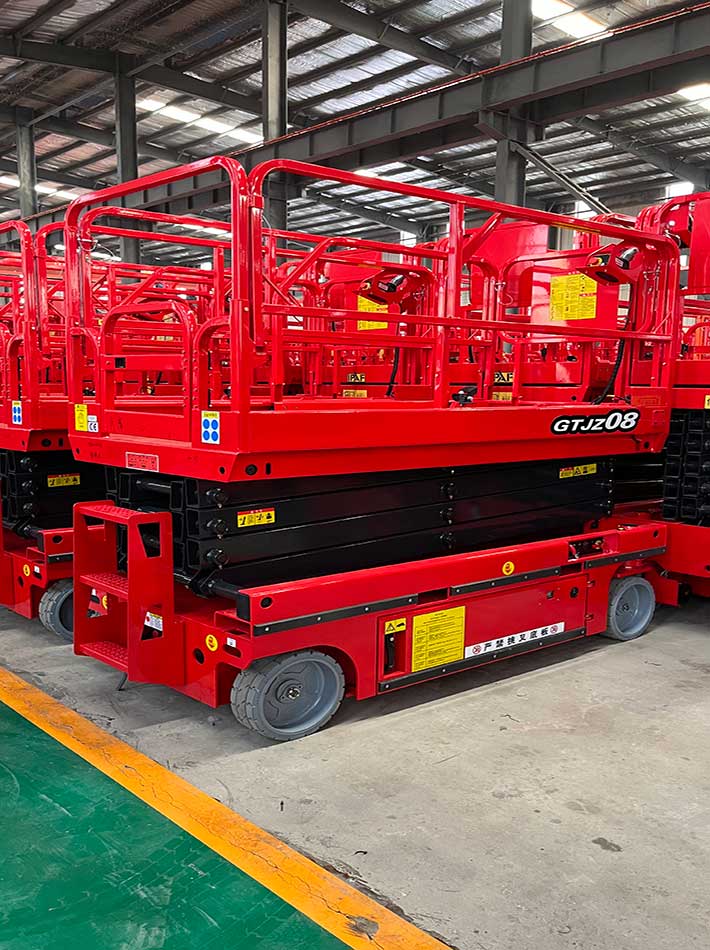
Reading the Spec Sheet Like an Engineer, Not a Catalog
Platform height grabs attention, but resale reliability hides in the lines buyers skim past. Here’s what to weigh, and why:
| Spec line | What the catalog says | What actually matters |
|---|---|---|
| Working height | 19 / 26 / 32 / 40 ft | The 26 ft class moves fastest — tall enough for most jobs, still fits a standard freight elevator |
| Duty cycle | Rarely listed | Ask how many full lift cycles per charge the hydraulics are rated for; this predicts lifespan |
| Deck extension | “Roll-out deck” | Steel roll-out decks outlast aluminum ones under daily abuse |
| Battery chemistry | “Maintenance-free” | AGM lead-acid is cheap and serviceable; lithium runs longer but raises landed cost and shipping rules |
| Drive motor | “DC drive” | Brushless motors fail far less than brushed; worth the spec confirmation |
| Pothole protection | Often omitted | Mandatory under EN 280 / ANSI A92.20 — its absence flags a non-compliant unit |
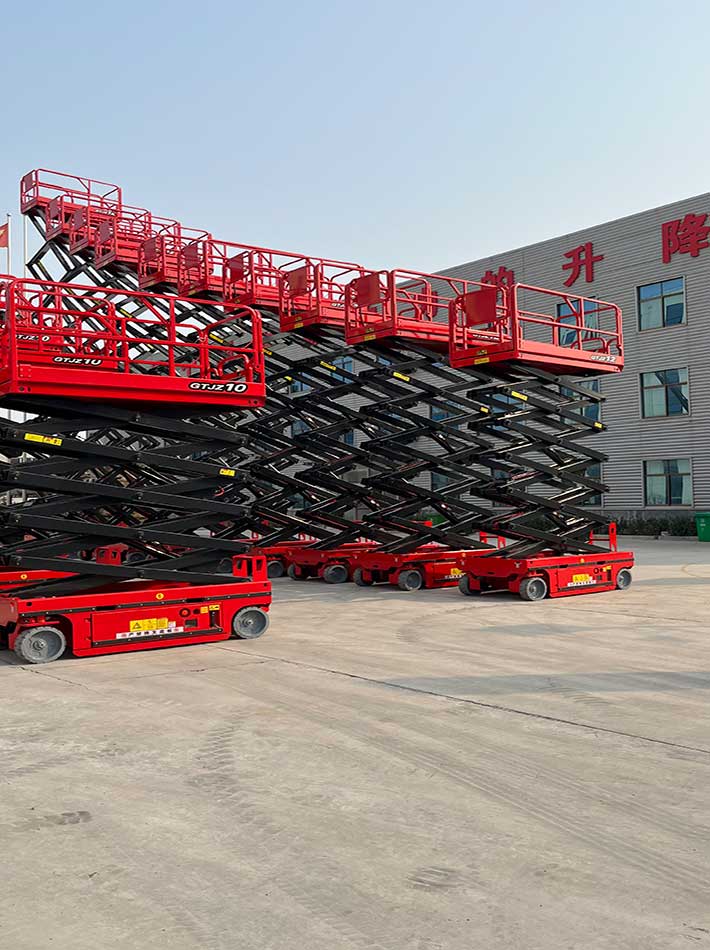
Which Models Actually Turn Over in Your Market
The 26 ft self-propelled workhorse
If you stock one SKU first, make it this. Rental yards and facility teams pull it for the widest range of indoor jobs, so it carries both the highest sell-through and the steadiest residual value.
Narrow-aisle units under 32 inches wide
These pass through a single doorway and down packed warehouse aisles. Retail chains and 3PL logistics buyers specifically request this width, and few traders stock it — a gap you can own.
Lithium models for emissions-strict regions
In markets pushing battery mandates (parts of the EU, California), lithium units command a premium and shorter sales cycles. Note the trade-off: lithium packs trigger UN 38.3 transport rules, so build that into your freight planning before you commit volume.
Factory vs. Trader: How to Tell Who You’re Really Buying From
Many “manufacturers” online are trading companies reselling a third party’s welds. A few questions surface the truth fast:
- Ask for a live video walk of the welding and assembly line, not edited clips.
- Request the test report for a specific serial number — a real factory pulls it in minutes.
- Probe customization limits: a true OEM can change deck size or control layout; a trader stalls.
- Cross-check the CE/ANSI certificate number against the issuing body’s database yourself.
Landed Cost: The Numbers Beyond the Unit Price
The quoted unit price is rarely the figure that decides your margin. For scissor lifts specifically, three line items swing the landed cost:
- Cubic volume, not weight — folded scissor lifts are bulky; container fit (how many nest per 40HQ) often matters more than per-kg freight.
- Battery freight surcharge — lithium units may need a dangerous-goods declaration and add cost per container.
- Spare hydraulic seals & cylinders — these are the parts that fail first in the field; price a service kit alongside the lifts, not after.
FAQ
How long does an electric scissor lift battery last per charge?
A healthy AGM pack typically supports a full 8-hour shift of intermittent use; heavy continuous cycling cuts that. Lithium holds output more steadily as it discharges, which is why rental fleets favor it despite the higher cost.
Can an electric scissor lift be used outdoors?
Standard slab-deck models are rated for firm, level indoor floors only. Outdoor use needs a rough-terrain electric variant with a wider wheelbase and higher ground clearance — a different SKU, not a setting.
What’s the difference between EN 280 and ANSI A92.20?
EN 280 governs sale into the EU; ANSI A92.20 (which replaced A92.6) covers North America. They differ on tilt sensors and load-sensing requirements, so a unit built only to one standard may not clear customs in the other market.
How many scissor lifts fit in a 40HQ container?
It depends on folded height and whether decks nest, but mid-size models commonly load in the low-to-mid teens per 40HQ. Always confirm the exact loading plan in writing before booking freight.
Do I need to assemble the lifts on arrival?
Most ship fully assembled and test-run from the factory, requiring only battery connection and a function check. Confirm this — partial-knockdown shipping lowers freight but adds labor on your end.
Talk Specs With the People Who Build Them
Tell us the platform heights your market pulls and the volume you’re planning, and we’ll map the right model mix to your container, flag any battery-freight or certification issues for your destination, and price it transparently — line by line, no reseller padding. Start the conversation with our engineering team.